
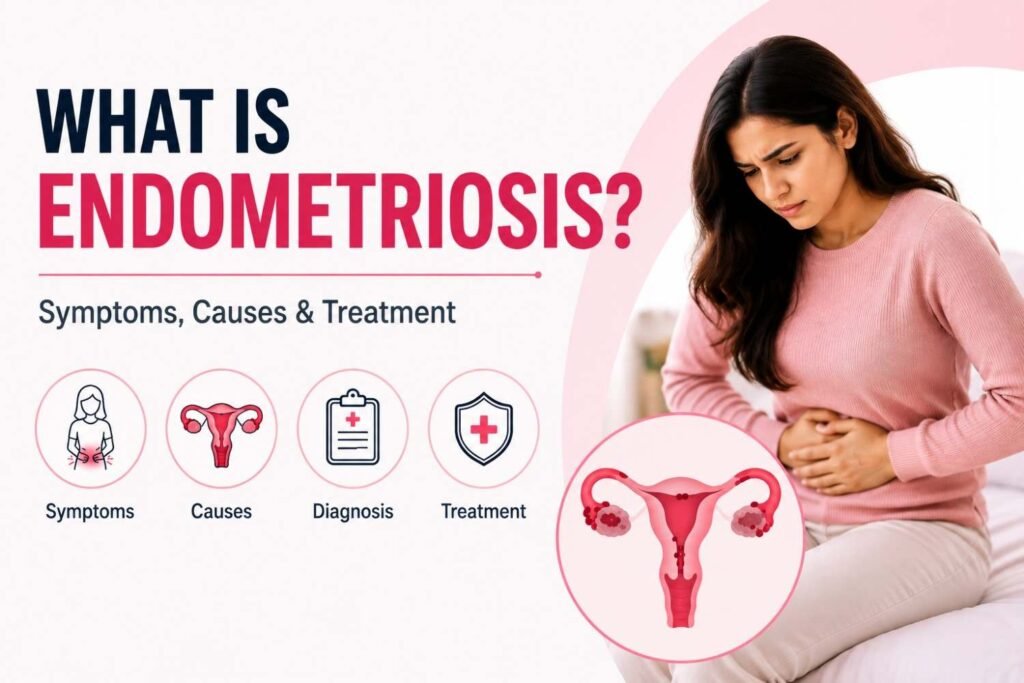

Many women experience painful periods, pelvic discomfort or heavy menstrual bleeding and assume these symptoms are simply a normal part of menstruation. However, when period pain is severe, keeps returning, affects daily activities or is associated with difficulty getting pregnant, endometriosis may be one possible cause.
So, what is endometriosis?
Endometriosis is a chronic condition in which tissue similar to the lining of the uterus grows outside the uterus. It most commonly affects areas within the pelvis, including the ovaries, fallopian tubes and tissues around the uterus, but it can sometimes occur in other parts of the body. The condition can cause inflammation, pain and scar tissue formation.
The World Health Organization estimates that endometriosis affects approximately 10% of women of reproductive age worldwide, or around 190 million people.
Endometriosis can affect everyone differently. Some people have significant pain, while others may have few or no noticeable symptoms. It can also be associated with fertility difficulties and can have a considerable impact on quality of life.
In this guide, we explain endometriosis symptoms, causes, diagnosis, treatment options, fertility concerns and when you should consult a gynecologist.
What Happens in Endometriosis?
Normally, the lining of the uterus changes throughout the menstrual cycle. In endometriosis, tissue similar to the uterine lining is found outside the uterus.
This tissue can respond to hormonal changes during the menstrual cycle. This may contribute to inflammation, irritation and scar tissue formation.
Endometriosis most commonly affects the pelvic region, including:
- Ovaries
- Fallopian tubes
- Outer surface of the uterus
- Pelvic lining
- Areas between the vagina and rectum
- Bowel
- Bladder
In less common cases, endometriosis can occur outside the pelvis.
Where Can Endometriosis Occur?
The location of endometriosis can influence the symptoms a person experiences.
Ovaries
Endometriosis affecting the ovaries can sometimes lead to endometriomas, which are cysts associated with endometriosis.
Fallopian Tubes
Disease and scarring around the fallopian tubes may affect pelvic anatomy and can contribute to fertility difficulties.
Pelvic Tissue
Endometriosis around pelvic structures can cause chronic pelvic pain and discomfort.
Bowel
When endometriosis affects the bowel, some people may experience pain associated with bowel movements, particularly around menstruation.
Bladder
Bladder involvement can sometimes be associated with urinary discomfort or pain.
Not everyone with endometriosis experiences the same symptoms or has disease in the same locations.
What Are the Symptoms of Endometriosis?
The symptoms of endometriosis can vary considerably.
Some people experience severe symptoms, while others may have minimal symptoms or none at all.
Common symptoms include:
1. Severe Period Pain
Pain during periods is one of the most commonly recognised symptoms.
Endometriosis-related period pain may be severe enough to interfere with:
- Work
- School
- Exercise
- Sleep
- Daily activities
2. Chronic Pelvic Pain
Some people experience pelvic pain that continues beyond their menstrual period.
3. Pain During or After Sex
Endometriosis can cause pain during or after sexual intercourse.
4. Pain During Bowel Movements
Some individuals experience bowel-related pain, particularly during menstruation.
5. Pain During Urination
Urinary discomfort or pain can occur in some cases, particularly when endometriosis affects areas around the urinary tract.
6. Heavy Menstrual Bleeding
Some people with endometriosis experience heavy periods or abnormal bleeding.
7. Fatigue
Persistent fatigue can accompany endometriosis and chronic pain.
8. Difficulty Getting Pregnant
Endometriosis is associated with infertility in some individuals and may be discovered during evaluation for difficulty conceiving.
Severe Period Pain: When Is It Not Normal?
Period discomfort can happen during menstruation, but severe or disabling period pain should not simply be ignored.
You should consider discussing your symptoms with a gynecologist if:
- Period pain prevents normal daily activities
- Pain is getting progressively worse
- Pain continues outside your periods
- You regularly need to miss work or school because of pain
- You experience pain during sex
- You experience bowel or urinary pain during periods
- You have difficulty getting pregnant
- Pain medicines are not providing adequate relief
- Your symptoms are significantly affecting your quality of life
The NHS recommends seeking medical evaluation when symptoms may indicate endometriosis, particularly when they affect everyday life, work or relationships.
What Causes Endometriosis?
The exact causes of endometriosis are not completely understood.
Researchers have proposed several possible mechanisms and risk factors, but there is currently no single confirmed cause that explains every case.
Research has also explored the role of immune-system processes, genetics and family history.
Family History
Having close relatives with endometriosis may be associated with a higher likelihood of developing the condition.
Hormonal Factors
Endometriosis is influenced by reproductive hormones, which is one reason symptoms may fluctuate during the menstrual cycle.
Other Factors
Researchers continue to investigate genetic, immune and inflammatory mechanisms involved in endometriosis.
It is important to remember that endometriosis is not caused by something a person has simply done wrong.
Who Is at Risk of Endometriosis?
Endometriosis can occur from adolescence through the reproductive years.
Some factors associated with increased likelihood include:
- Family history of endometriosis
- Early onset of menstruation
- Longer or heavier menstrual cycles
- Significant menstrual pain
- Other reproductive or pelvic factors
However, having a risk factor does not mean that someone will definitely develop endometriosis.
Endometriosis and Infertility
One of the most important concerns associated with endometriosis is fertility.
Some people with endometriosis have difficulty becoming pregnant. WHO notes that endometriosis can be associated with infertility, and estimates that among women experiencing infertility, approximately 25–50% may have endometriosis.
Several factors may contribute, including:
- Inflammation
- Scar tissue
- Changes in pelvic anatomy
- Ovarian endometriomas
- Effects on the fallopian tubes
- Other factors affecting reproductive function
However, having endometriosis does not automatically mean that pregnancy is impossible.
Fertility planning should be individualised based on age, symptoms, ovarian reserve, disease severity, previous treatment and pregnancy goals.
How Is Endometriosis Diagnosed?
Diagnosing endometriosis can sometimes be challenging because its symptoms can resemble other conditions, including fibroids, adenomyosis, pelvic inflammatory disease and irritable bowel syndrome.
A gynecologist may begin with a detailed discussion about:
- Menstrual cycle
- Period pain
- Pelvic pain
- Pain during intercourse
- Bowel symptoms
- Urinary symptoms
- Previous treatments
- Fertility history
- Family history
Depending on the symptoms, further evaluation may be recommended.
Ultrasound and MRI for Endometriosis
Imaging can be useful when evaluating suspected endometriosis.
Ultrasound
A pelvic ultrasound may help identify:
- Ovarian cysts
- Endometriomas
- Certain features associated with endometriosis
- Other possible causes of pelvic symptoms
MRI
MRI may be recommended in selected cases, particularly when a doctor needs additional information about the location or extent of suspected disease.
Importantly, a normal scan does not necessarily mean that endometriosis is impossible. Diagnosis needs to be considered in the context of symptoms, examination and other findings. WHO notes that clinical diagnosis may be based on symptoms and imaging, and surgery is not necessarily required before treatment is started.
Is Laparoscopy Needed to Diagnose Endometriosis?
Laparoscopy is a minimally invasive surgical procedure in which a camera is inserted through small abdominal incisions to examine the pelvis.
In selected patients, laparoscopy may help identify endometriosis and can also allow treatment during the procedure.
However, current approaches do not require every patient with suspected endometriosis to undergo surgery before treatment. The appropriate diagnostic pathway depends on symptoms, examination, imaging, fertility goals and clinical judgement.
What Are the Treatment Options for Endometriosis?
There is currently no definitive cure for endometriosis, but treatment can help manage pain, control symptoms and address fertility concerns.
The best treatment depends on:
- Symptoms
- Severity and location of disease
- Age
- Previous treatments
- Side effects
- Fertility plans
- Individual preferences
Treatment may include medication, hormonal therapy, surgery or fertility treatment.
Medicines for Endometriosis
Pain-relieving medicines may be recommended to manage symptoms.
Depending on the individual situation, doctors may consider:
- Pain-relieving medicines
- Anti-inflammatory medicines
- Hormonal treatments
- Other medications for specific cases
Hormonal treatments can reduce or control endometriosis-related pain for some patients. However, some hormonal treatments are not suitable for people who are actively trying to become pregnant.
Do not start hormonal medicines or long-term pain medication without medical advice.
Laparoscopic Surgery for Endometriosis
For selected patients, surgery may be recommended when:
- Symptoms are severe
- Medical treatment has not provided adequate relief
- Endometriosis is extensive
- Endometriomas or adhesions are present
- Endometriosis is affecting fertility
- There are specific complications requiring surgical treatment
Laparoscopic surgery can allow a surgeon to identify and treat endometriosis lesions, adhesions or related cysts in appropriate cases.
The decision to undergo surgery should be based on an individual assessment.
Is Laparoscopic Surgery Always Required?
No.
Not every person with endometriosis requires surgery. Depending on symptoms and individual circumstances, treatment may begin with medical management, monitoring or other approaches.
Endometriosis and Pregnancy
Many women with endometriosis can become pregnant, but some may experience difficulty conceiving.
If you have known or suspected endometriosis and are planning pregnancy, discuss your fertility goals with a gynecologist.
Depending on your situation, your doctor may recommend:
- Natural conception planning
- Fertility evaluation
- Ovulation-related treatment
- IUI
- IVF
- Surgical treatment in selected cases
WHO notes that fertility treatments such as ovulation induction, IUI or IVF may be considered for people experiencing infertility associated with endometriosis.
Can Endometriosis Come Back?
Endometriosis can be a long-term condition, and symptoms may return after treatment in some people.
This is why ongoing follow-up may be important, particularly when symptoms continue or return.
Treatment should focus not only on immediate pain relief but also on long-term symptom management, reproductive goals and quality of life.
When Should You See a Gynecologist?
Consider consulting a gynecologist if you have:
- Severe period pain
- Persistent pelvic pain
- Pain during sex
- Pain during bowel movements
- Pain while urinating
- Heavy or abnormal periods
- Persistent fatigue associated with menstrual symptoms
- Difficulty getting pregnant
- Recurrent pelvic symptoms despite treatment
You do not have to wait until pain becomes severe before seeking evaluation.
Early medical assessment can help identify possible causes and determine an appropriate treatment plan.
Endometriosis: Common Myths
Myth 1: Severe period pain is always normal.
Fact: Mild menstrual discomfort can be common, but severe pain that disrupts everyday life deserves medical evaluation.
Myth 2: Endometriosis always causes infertility.
Fact: Endometriosis can be associated with infertility, but many people with endometriosis can become pregnant.
Myth 3: A normal ultrasound completely rules out endometriosis.
Fact: Imaging can help identify certain forms of endometriosis, but diagnosis requires consideration of symptoms, examination and clinical findings.
Myth 4: Surgery is the only treatment.
Fact: Treatment may include medicines, hormonal therapy, surgery and fertility-focused care depending on the individual.
Myth 5: Endometriosis is just a period problem.
Fact: Endometriosis can affect pelvic health, daily activities, sexual health, fertility and emotional well-being.
Frequently Asked Questions About Endometriosis
What is endometriosis in simple words?
Endometriosis is a chronic condition in which tissue similar to the lining of the uterus grows outside the uterus. It can cause inflammation, pain and scar tissue.
What are the first signs of endometriosis?
Common symptoms can include severe period pain, pelvic pain, pain during sex, bowel or urinary pain and difficulty becoming pregnant. Some people may have few or no symptoms.
Is endometriosis dangerous?
Endometriosis is a chronic condition that can significantly affect quality of life and fertility in some people. The seriousness varies from person to person.
Can endometriosis be cured permanently?
There is currently no definitive cure for endometriosis. However, treatment can help manage symptoms and address complications or fertility concerns.
Can endometriosis cause infertility?
Yes. Endometriosis can be associated with difficulty becoming pregnant, although many women with the condition can still conceive.
Is endometriosis cancer?
Endometriosis is not the same as cancer. It is a chronic gynecological condition involving tissue similar to the uterine lining outside the uterus.
Can endometriosis be treated without surgery?
Yes. Depending on symptoms and individual circumstances, doctors may recommend pain medication, hormonal treatment or other non-surgical approaches.
Is laparoscopic surgery useful for endometriosis?
For selected patients, laparoscopic surgery can be used to diagnose and/or treat endometriosis, remove lesions or adhesions and treat certain endometriosis-related cysts.
Can endometriosis come back after surgery?
Symptoms or disease can recur in some people after treatment, so follow-up may be important.
Does endometriosis always cause symptoms?
No. Some people with endometriosis may have few or no noticeable symptoms.
Can teenagers have endometriosis?
Yes. Endometriosis can affect people from adolescence through the reproductive years.
When should I see a gynecologist for period pain?
If your period pain is severe, worsening, affecting your daily life or associated with pelvic pain, painful sex, bowel/urinary symptoms or fertility concerns, it is appropriate to discuss it with a gynecologist.
Endometriosis Treatment in Mohali
If you are experiencing severe period pain, chronic pelvic pain, painful intercourse, heavy periods or difficulty conceiving, don’t simply assume that these symptoms are normal.
A gynecological evaluation can help identify possible causes and determine whether further investigation for conditions such as endometriosis is appropriate.
SPAW Hospital, Sector 70, Mohali provides gynecology and women’s healthcare services for patients seeking evaluation and treatment for a range of gynecological concerns.
When You Need Medical Advice, Don’t Ignore Persistent Pain
Consult a Gynecologist at SPAW Hospital
📍 SPAW Hospital, Sector 70, Mohali
[Book a Gynecology Consultation]
Conclusion
What is endometriosis? It is a chronic gynecological condition in which tissue similar to the lining of the uterus grows outside the uterus and may cause inflammation, pelvic pain, painful periods, pain during intercourse, bowel or urinary symptoms and, in some cases, difficulty becoming pregnant.
Although there is currently no definitive cure, endometriosis treatment can help manage symptoms and address individual fertility and quality-of-life concerns. Treatment may include medication, hormonal therapy, laparoscopic surgery or fertility treatment depending on the person’s symptoms and goals.
Most importantly, severe period pain should not automatically be considered normal. If menstrual or pelvic symptoms are interfering with your daily life, speak with a qualified gynecologist for an appropriate evaluation.


