
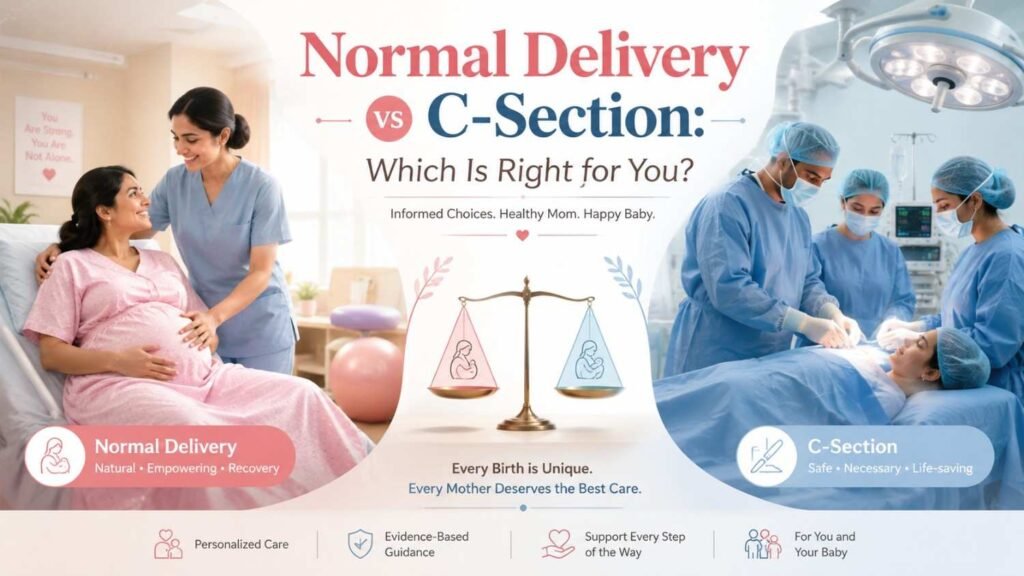

Pregnancy is one of life’s most exciting journeys, but it also comes with many important decisions. One of the biggest questions expecting parents ask is Normal Delivery vs C-Section: Which is the better option?
If you’re approaching your due date, it’s natural to wonder which pregnancy delivery option is safest for you and your baby. While many women hope for a normal delivery, others may require a C-section delivery due to medical reasons. Understanding the differences between these childbirth methods can help you feel informed, confident, and prepared.
The truth is that there is no one-size-fits-all answer. The best delivery method depends on your health, your baby’s condition, and your obstetrician’s medical advice. This guide explains everything you need to know about Normal Delivery vs C-Section, including benefits, risks, recovery, and when each method is recommended.
Normal delivery, also known as vaginal birth, is the natural process of giving birth through the birth canal. Labor usually begins with regular contractions that gradually open the cervix, allowing the baby to be delivered.
A normal delivery typically involves three stages:
- Labor and cervical dilation
- Birth of the baby
- Delivery of the placenta
For healthy pregnancies, vaginal birth is often considered the preferred option because it allows the body to recover more quickly and reduces the risks associated with major surgery.
What Is a C-Section?
A Cesarean section, commonly called a C-section delivery, is a surgical procedure in which the baby is delivered through an incision made in the mother’s abdomen and uterus.
A C-section may be:
- Planned (elective)
- Scheduled for medical reasons
- Performed as an emergency during labor
Although a C-section is major surgery, it is a safe and lifesaving procedure when medically necessary.
Normal Delivery vs C-Section: Quick Comparison
| Feature | Normal Delivery | C-Section Delivery |
|---|---|---|
| Procedure | Vaginal birth | Surgical birth |
| Hospital Stay | 1–2 days | 3–5 days |
| Recovery | Faster | Longer |
| Pain After Birth | Usually less | Usually more due to surgery |
| Infection Risk | Lower | Higher |
| Future Pregnancies | Generally easier | May affect future pregnancies |
| Best For | Low-risk pregnancies | Certain medical situations |
Benefits of Normal Delivery
Choosing normal delivery offers several advantages for both mother and baby.
1. Faster Recovery
One of the biggest benefits of normal delivery is quicker healing. Most mothers can walk within hours and resume many daily activities sooner than after surgery.
2. Lower Surgical Risks
Since no major surgery is involved, there is a lower risk of:
- Heavy bleeding
- Surgical infection
- Blood clots
- Anesthesia-related complications
3. Better Early Bonding
Mothers often experience immediate skin-to-skin contact and can begin breastfeeding shortly after birth.
4. Improved Baby’s Lung Function
During vaginal birth, pressure through the birth canal helps remove fluid from the baby’s lungs, supporting healthy breathing after delivery.
5. Shorter Hospital Stay
Most women return home within one or two days following an uncomplicated vaginal birth.
Benefits of C-Section
Although many women prefer vaginal birth, there are important benefits of C-section when medically indicated.
1. Can Save Lives
A C-section is often the safest option if complications threaten the health of the mother or baby.
2. Planned Delivery
Scheduled procedures allow families and healthcare teams to prepare for the birth date.
3. Reduces Certain Birth Injuries
For babies in difficult positions or during complicated labor, a C-section may lower the risk of trauma during delivery.
4. Helpful in High-Risk Pregnancies
Women with certain medical conditions may benefit from a planned Cesarean section.
Examples include:
- Placenta previa
- Complete breech presentation
- Certain twin pregnancies
- Previous complex uterine surgery
Risks and Complications
Every delivery method has potential risks.
Risks of Normal Delivery
Possible complications include:
- Perineal tears
- Heavy bleeding after birth
- Pelvic floor weakness
- Temporary urinary incontinence
- Emergency C-section if labor does not progress
Fortunately, many women experience uncomplicated vaginal births.
Risks of C-Section Delivery
Since it is major surgery, a C-section carries additional risks such as:
- Infection
- Blood loss
- Blood clots
- Longer recovery
- Surgical pain
- Scar formation
- Possible complications in future pregnancies
Most C-sections are performed safely, especially in experienced hospitals.
Normal Delivery Recovery vs C-Section Recovery
Recovery is one of the biggest differences when comparing Normal Delivery vs C-Section.
Normal Delivery Recovery
Most women recover within several weeks.
Typical recovery includes:
- Walking within hours
- Mild vaginal soreness
- Less postoperative pain
- Earlier return to normal activities
- Easier lifting and movement
C-Section Recovery
C-section recovery generally takes longer because the abdominal muscles and uterus need time to heal.
Recovery usually involves:
- Hospital stay of 3–5 days
- Limited lifting
- Pain medication
- Incision care
- Several weeks before returning to strenuous activities
Every mother’s recovery timeline is unique.
When Is a C-Section Medically Necessary?
A doctor may recommend a Cesarean section in situations such as:
- Baby in breech or transverse position
- Placenta previa
- Placental abruption
- Umbilical cord prolapse
- Fetal distress
- Failure of labor to progress
- Very large baby (in selected cases)
- Previous uterine surgery
- Certain maternal infections
- Severe preeclampsia or eclampsia
In these situations, a C-section may be the safest way to ensure safe childbirth.
Which Delivery Method Is Best?
Many parents ask, Which delivery method is best?
The answer depends on several factors:
Normal delivery may be recommended if:
- Pregnancy is low risk.
- Baby is in a head-down position.
- Labor progresses normally.
- Mother and baby remain healthy.
C-section may be recommended if:
- Medical complications arise.
- Labor becomes unsafe.
- Baby shows signs of distress.
- Vaginal delivery poses significant risks.
The safest decision should always be made together with your obstetrician after evaluating your pregnancy.
How to Prepare for Safe Childbirth
Whether you are planning a vaginal birth or preparing for a possible C-section, these steps can help.
1. Attend Regular Prenatal Checkups
Routine visits allow your doctor to monitor your baby’s growth and detect complications early.
2. Eat a Healthy Diet
Focus on:
- Fruits
- Vegetables
- Protein
- Whole grains
- Iron-rich foods
- Calcium-rich foods
3. Stay Physically Active
If approved by your doctor, pregnancy-safe exercise may improve stamina and prepare your body for labor.
4. Learn About Labor
Attend childbirth education classes and discuss your birth preferences with your healthcare provider.
5. Keep an Open Mind
Birth plans are helpful, but flexibility is important. Sometimes medical situations require changing the delivery method for everyone’s safety.
Common Mistakes to Avoid
Many expecting parents unknowingly make these mistakes:
- Believing one delivery method is always better than the other.
- Ignoring medical advice.
- Delaying hospital visits during labor.
- Comparing experiences with friends instead of seeking professional guidance.
- Focusing only on the birth and not planning for postpartum recovery.
Remember, a healthy mother and healthy baby are the ultimate goals.
Key Takeaways
- Normal delivery is usually recommended for uncomplicated pregnancies.
- C-section delivery is often lifesaving when medical complications occur.
- Recovery after vaginal birth is generally faster.
- C-section recovery requires more time because it is major surgery.
- The safest childbirth method depends on individual medical circumstances.
- Your obstetrician is the best person to guide your delivery decision.
Frequently Asked Questions
1. Is normal delivery safer than a C-section?
For uncomplicated pregnancies, vaginal birth is generally associated with fewer surgical risks and quicker recovery. However, when complications arise, a C-section may be the safer option.
2. Which delivery is less painful?
Pain experiences vary. Vaginal birth involves labor pain, while a C-section is performed under anesthesia but typically involves more postoperative discomfort during recovery.
3. Can I choose a C-section without a medical reason?
In some situations, elective C-sections are available, but the decision should be made after discussing the benefits and risks with your obstetrician.
4. How long does recovery take after normal delivery?
Most women recover within a few weeks, although complete healing varies depending on individual circumstances and whether there were any birth-related tears or complications.
5. How long is C-section recovery?
Initial recovery usually takes several weeks, while complete healing may take longer depending on overall health and postoperative care.
6. Can I have a normal delivery after a previous C-section?
Many women may be candidates for a vaginal birth after Cesarean (VBAC), depending on factors such as the type of uterine incision, the reason for the previous C-section, and current pregnancy health. Your doctor can determine whether VBAC is appropriate.
7. Which delivery is better for the baby?
Both methods can be safe. The best option depends on the baby’s condition and the mother’s health during pregnancy and labor.
Conclusion
Choosing between Normal Delivery vs C-Section is an important decision, but it should never be based on myths or fear alone. Both normal delivery and C-section delivery have clear benefits and potential risks, and each plays an essential role in ensuring safe childbirth.
For most healthy pregnancies, vaginal birth remains the preferred option because of its quicker recovery and lower surgical risks. However, when medical complications develop, a Cesarean section can be the safest and most effective way to protect both mother and baby.
The best approach is to stay informed, attend regular prenatal checkups, discuss your childbirth options with your obstetrician, and remain flexible if circumstances change. Every pregnancy is unique, and the right delivery method is the one that provides the safest outcome for both you and your baby.
Looking for expert pregnancy care?
Our experienced obstetricians provide personalized prenatal care, labor management, normal delivery, and advanced C-section delivery services. Whether you’re planning your birth or seeking a second opinion, we’re here to guide you through every stage of pregnancy with compassionate, evidence-based care.
Book your prenatal consultation today and let our maternity specialists help you plan a safe and confident childbirth experience.


