
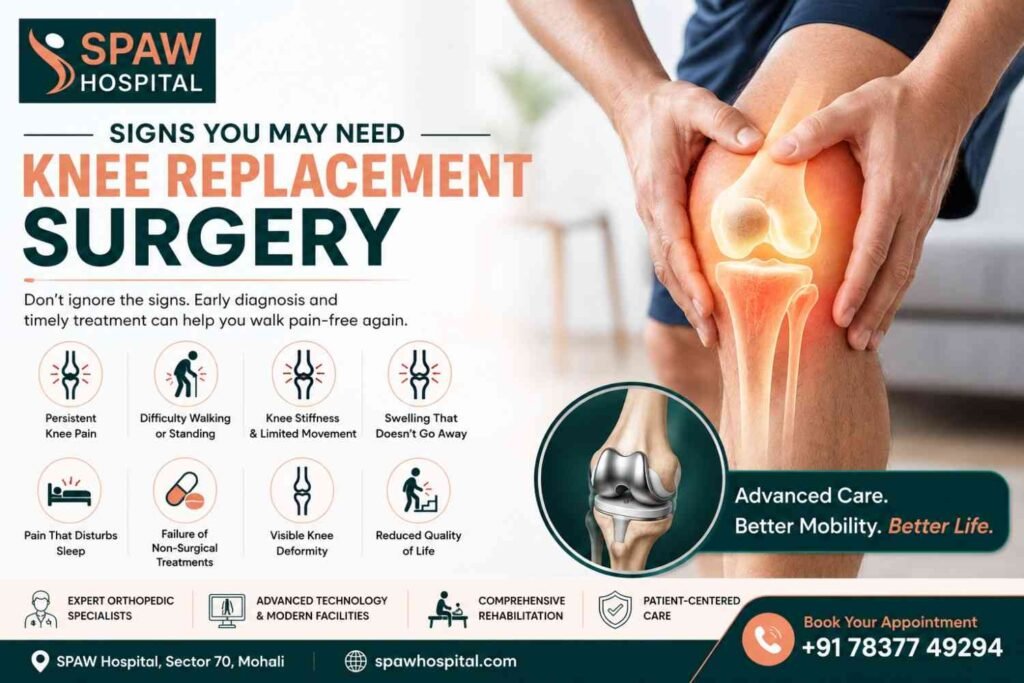

Knee pain is one of the most common orthopedic problems affecting adults, especially as they age. While mild discomfort can often be managed with medications, physiotherapy, and lifestyle changes, severe knee damage may eventually require surgical intervention. Knee replacement surgery can significantly improve mobility, reduce pain, and restore quality of life for individuals suffering from advanced knee joint conditions.
But how do you know when it’s time to consider knee replacement surgery?
In this article, we discuss the major signs and symptoms that may indicate you need knee replacement surgery and when you should consult an orthopedic specialist.
What Is Knee Replacement Surgery?
Knee replacement surgery, also known as knee arthroplasty, is a procedure in which damaged parts of the knee joint are replaced with artificial implants. It is commonly recommended for patients suffering from severe arthritis, joint degeneration, or chronic knee pain that affects daily activities.
The goal of knee replacement surgery is to:
- Relieve chronic knee pain
- Improve mobility and flexibility
- Restore normal knee function
- Enhance overall quality of life
Common Conditions That Lead to Knee Replacement
Several conditions can cause severe knee joint damage, including:
Osteoarthritis
The most common reason for knee replacement surgery. Osteoarthritis occurs when the cartilage cushioning the knee gradually wears away.
Rheumatoid Arthritis
An autoimmune condition that causes inflammation and damage to the knee joints.
Post-Traumatic Arthritis
Arthritis that develops after a knee injury or fracture.
Severe Knee Deformities
Conditions that cause bow-legged or knock-kneed alignment can lead to significant joint damage over time.
Signs You May Need Knee Replacement Surgery
1. Persistent Knee Pain
One of the most obvious signs is ongoing knee pain that does not improve with conservative treatments.
You may experience:
- Pain while walking
- Pain when climbing stairs
- Pain during exercise
- Pain even while resting
If knee pain persists for months despite medications and therapy, it may indicate advanced joint damage.
2. Difficulty Walking or Standing
As knee damage progresses, everyday activities become increasingly challenging.
Warning signs include:
- Difficulty walking short distances
- Trouble standing for extended periods
- Needing support while walking
- Reduced independence in daily activities
When mobility becomes severely limited, knee replacement surgery may be the most effective solution.
3. Severe Knee Stiffness
Knee stiffness can make it difficult to bend or straighten your leg properly.
You may notice:
- Difficulty getting out of bed
- Trouble getting up from a chair
- Limited knee movement
- Reduced flexibility
Persistent stiffness often indicates significant cartilage deterioration within the knee joint.
4. Swelling That Doesn’t Go Away
Inflammation and swelling are common symptoms of advanced knee arthritis.
Seek medical evaluation if you experience:
- Constant knee swelling
- Warmth around the joint
- Swelling that returns repeatedly
- Symptoms that do not improve with medication
Chronic swelling may suggest ongoing joint degeneration.
5. Knee Pain That Disturbs Sleep
Healthy knees should not prevent you from getting a good night’s sleep.
Many patients who require knee replacement report:
- Pain while lying down
- Difficulty finding a comfortable sleeping position
- Frequent nighttime awakening due to pain
Night pain often indicates severe arthritis and advanced joint wear.
6. Failure of Non-Surgical Treatments
Doctors typically recommend non-surgical treatments before considering surgery.
These may include:
- Pain medications
- Physical therapy
- Weight management
- Knee braces
- Joint injections
If these treatments no longer provide relief, knee replacement surgery may be the next step.
7. Visible Knee Deformity
Changes in the shape or alignment of your knee should not be ignored.
Examples include:
- Bow-legged appearance
- Knock-kneed alignment
- Uneven leg positioning
Visible deformities often indicate severe joint damage requiring surgical correction.
8. Reduced Quality of Life
When knee pain begins interfering with your daily routine, it may be time to consider surgical treatment.
You may struggle with:
- Household chores
- Shopping
- Traveling
- Recreational activities
- Social interactions
If your knee condition limits your ability to enjoy life, a consultation with an orthopedic specialist is recommended.
Benefits of Knee Replacement Surgery
Modern knee replacement surgery offers excellent outcomes for suitable candidates.
Benefits include:
- Significant pain relief
- Improved mobility
- Better joint function
- Increased independence
- Enhanced quality of life
- Long-lasting results
Most patients experience dramatic improvement within months of surgery and can return to many normal activities.
Who Is a Good Candidate for Knee Replacement Surgery?
You may be a candidate if you:
- Have severe knee arthritis
- Experience chronic knee pain
- Have limited mobility
- Have failed conservative treatments
- Have significant joint damage visible on imaging studies
A thorough orthopedic evaluation is necessary to determine whether knee replacement surgery is the right option.
Why Choose SPAW Hospital for Knee Replacement Surgery?
At SPAW Hospital, our experienced orthopedic team provides comprehensive evaluation and advanced treatment for knee joint disorders.
We offer:
- Expert orthopedic consultations
- Advanced diagnostic facilities
- Personalized treatment plans
- Modern surgical techniques
- Comprehensive rehabilitation support
Our goal is to help patients regain mobility, reduce pain, and return to active living.
Conclusion
Chronic knee pain should never be ignored. Persistent discomfort, stiffness, swelling, difficulty walking, and reduced quality of life may all indicate the need for knee replacement surgery. Early consultation with an orthopedic specialist can help determine the best treatment approach and prevent further joint deterioration.
If you are experiencing ongoing knee problems, schedule an orthopedic consultation at SPAW Hospital to explore your treatment options and take the first step toward pain-free movement.


