

Fibroids are one of the most common gynecological conditions affecting women, especially during their reproductive years. While many fibroids remain small and cause no symptoms, larger fibroids can lead to significant health concerns and may require medical treatment. One of the most common questions women ask is: “Which size of fibroid is dangerous?”
In this comprehensive guide, we’ll explain fibroid sizes, when they become a concern, symptoms to watch for, and the treatment options available.
What Are Fibroids?
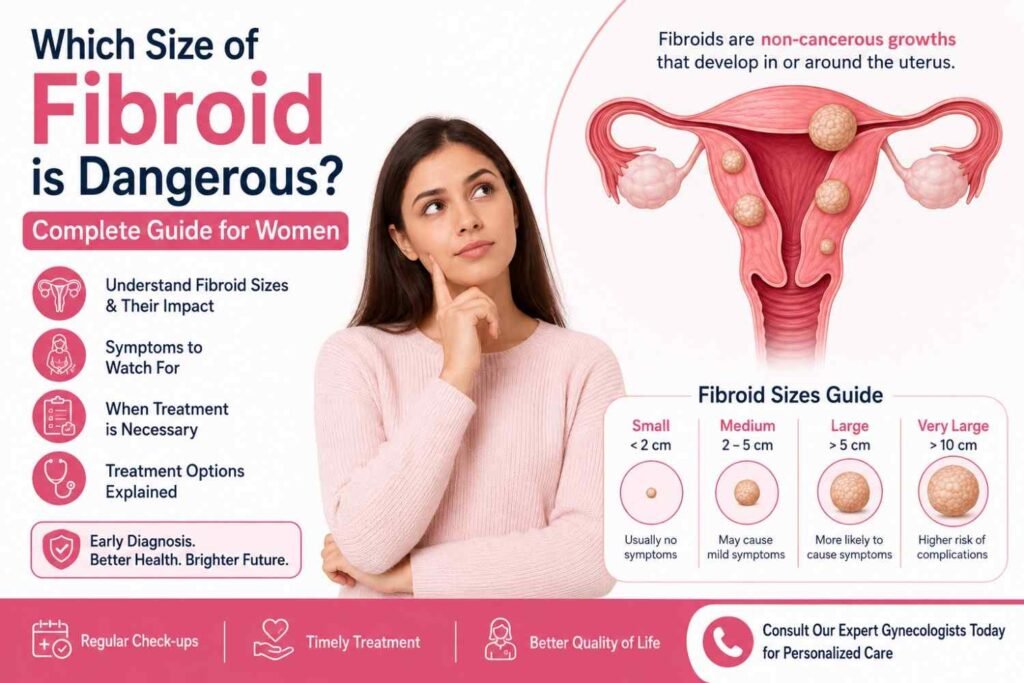
Fibroids, also known as uterine fibroids or leiomyomas, are non-cancerous growths that develop in or around the uterus. They can vary greatly in size, number, and location.
Fibroids may develop:
- Inside the uterine wall (intramural fibroids)
- Inside the uterine cavity (submucosal fibroids)
- On the outer surface of the uterus (subserosal fibroids)
- Attached to the uterus by a stalk (pedunculated fibroids)
Although fibroids are usually benign, their size and location can significantly affect a woman’s health and quality of life.
Understanding Fibroid Sizes
Doctors generally categorize fibroids based on their size:
Small Fibroids
- Less than 2 cm (about the size of a pea)
- Usually cause few or no symptoms
- Often discovered during routine examinations
Medium Fibroids
- 2 cm to 5 cm
- May begin causing symptoms depending on location
- Can affect menstrual bleeding and pelvic comfort
Large Fibroids
- Larger than 5 cm
- More likely to cause noticeable symptoms
- May affect nearby organs and fertility
Very Large Fibroids
- Larger than 10 cm
- Can significantly enlarge the uterus
- Often require medical or surgical intervention
Which Size of Fibroid Is Considered Dangerous?
There is no single fibroid size that is automatically considered dangerous. However, fibroids become more concerning when they are:
Larger Than 5 cm
Fibroids larger than 5 cm are more likely to cause:
- Heavy menstrual bleeding
- Pelvic pain
- Pressure on surrounding organs
- Frequent urination
- Constipation
Larger Than 8–10 cm
Fibroids in this size range may:
- Distort the uterus
- Affect fertility
- Increase pregnancy complications
- Cause significant discomfort and abdominal swelling
Larger Than 10 cm
Very large fibroids can:
- Compress the bladder or bowel
- Cause severe anemia due to excessive bleeding
- Lead to chronic pelvic pain
- Require surgical removal
The danger often depends more on symptoms and location than size alone.
Symptoms That Indicate a Fibroid May Be Dangerous
Regardless of size, seek medical evaluation if you experience:
Heavy Menstrual Bleeding
Excessive bleeding can lead to:
- Iron-deficiency anemia
- Fatigue
- Weakness
- Shortness of breath
Severe Pelvic Pain
Pain may indicate:
- Rapid fibroid growth
- Degeneration of the fibroid
- Pressure on surrounding tissues
Frequent Urination
Large fibroids may press against the bladder, causing:
- Increased urinary frequency
- Difficulty emptying the bladder completely
Constipation
Fibroids pressing on the rectum can lead to:
- Chronic constipation
- Painful bowel movements
Difficulty Getting Pregnant
Certain fibroids can interfere with:
- Implantation
- Fertility
- Successful pregnancy outcomes
Can Small Fibroids Be Dangerous?
Yes. Even small fibroids can be problematic if they are located inside the uterine cavity.
Submucosal fibroids, even when small, can:
- Cause heavy bleeding
- Lead to infertility
- Increase miscarriage risk
Therefore, doctors evaluate both size and location when determining treatment.
Fibroids and Pregnancy
Fibroids may affect pregnancy depending on their size and position.
Potential complications include:
- Miscarriage
- Preterm labor
- Abnormal fetal position
- Placental problems
- Increased likelihood of cesarean delivery
Women planning pregnancy should consult a gynecologist if fibroids are present, especially if they exceed 4–5 cm.
When Should Fibroids Be Removed?
Treatment may be recommended when fibroids:
- Cause heavy bleeding
- Lead to anemia
- Cause severe pelvic pain
- Affect fertility
- Grow rapidly
- Compress nearby organs
- Interfere with normal daily activities
A gynecologist will recommend treatment based on symptoms, age, fertility goals, and overall health.
Treatment Options for Fibroids
Medication
For symptom management:
- Hormonal medications
- Pain relief medicines
- Treatments to reduce bleeding
Laparoscopic Fibroid Removal (Myomectomy)
A minimally invasive procedure that:
- Removes fibroids while preserving the uterus
- Offers faster recovery
- Causes less pain and scarring
Hysteroscopic Fibroid Removal
Used for fibroids inside the uterine cavity.
Hysterectomy
Recommended for severe cases when:
- Childbearing is complete
- Symptoms are significant
- Multiple large fibroids are present
Why Early Diagnosis Matters
Many women ignore symptoms such as heavy periods or pelvic pressure, assuming they are normal. Early diagnosis can:
- Prevent complications
- Preserve fertility
- Reduce treatment complexity
- Improve quality of life
Regular gynecological check-ups and pelvic ultrasounds can help detect fibroids before they become problematic.
Frequently Asked Questions
Is a 4 cm fibroid dangerous?
Usually not, but it may cause symptoms depending on its location.
Is a 7 cm fibroid considered large?
Yes. A 7 cm fibroid is generally considered large and may require treatment if symptoms are present.
Can a 10 cm fibroid be removed laparoscopically?
In many cases, experienced laparoscopic surgeons can remove fibroids of this size using minimally invasive techniques.
Do all fibroids require surgery?
No. Many fibroids can be monitored if they are small and symptom-free.
Can fibroids become cancerous?
Fibroids are almost always benign. Cancerous transformation is extremely rare.
Conclusion
The question “Which size of fibroid is dangerous?” does not have a one-size-fits-all answer. While fibroids larger than 5 cm are more likely to cause symptoms, the true concern depends on their location, growth rate, and impact on a woman’s health.
If you experience heavy periods, pelvic pain, abdominal swelling, or fertility concerns, consult a gynecologist for proper evaluation. Early diagnosis and treatment can prevent complications and help you maintain a healthy, active life.
Expert Fibroid Care at SPAW Hospital Mohali, Chandigarh
If you are experiencing symptoms of fibroids, the expert gynecology team at SPAW Hospital Mohali, Chandigarh offers comprehensive diagnosis and advanced treatment options, including minimally invasive laparoscopic surgery.
Book Your Consultation Today
📞 +91 78377 49294
🏥 SPAW Hospital Mohali, Chandigarh
Take the first step toward better women’s health with expert care and personalized treatment.


