
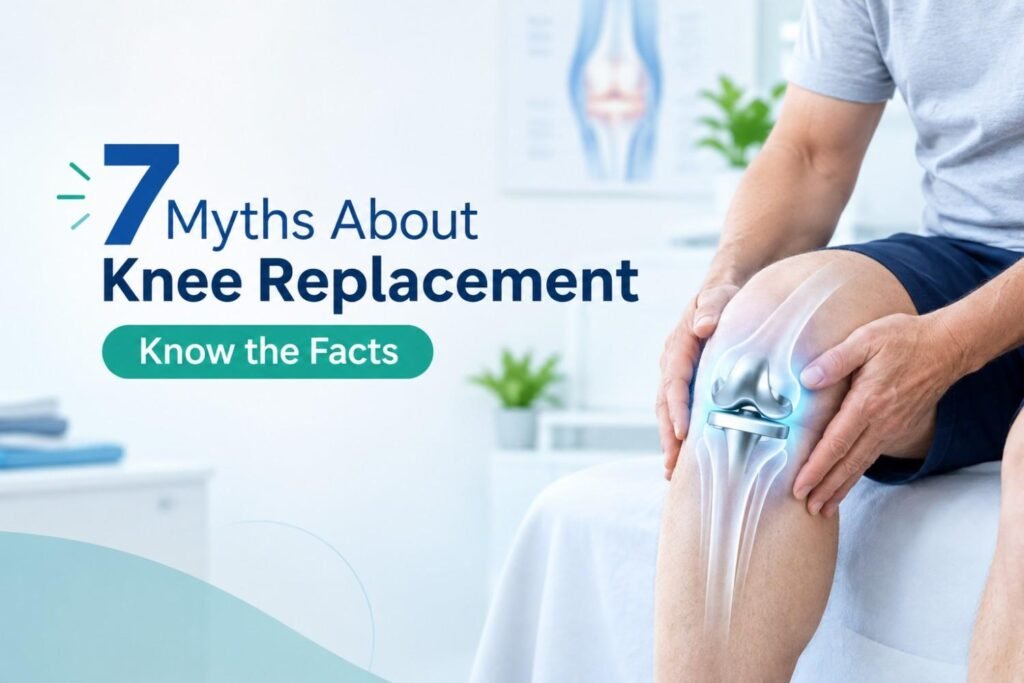

Knee pain can gradually affect almost every part of daily life. Walking, climbing stairs, getting up from a chair, exercising or even sleeping can become difficult when knee arthritis or severe joint damage progresses.
For some patients, knee replacement surgery can provide significant pain relief and improve mobility when non-surgical treatments are no longer providing adequate relief.
However, many people delay speaking with an orthopaedic surgeon because they have heard frightening stories or misleading information about knee replacement.
Some patients believe that knee replacement is only suitable for very old people. Others worry that the operation is extremely painful, that they will never bend their knee properly again, or that implants need to be replaced after only a few years.
These are some of the most common knee replacement surgery myths.
In this article, we separate seven common myths from the facts so that patients can have a more informed discussion with their orthopaedic surgeon.
Important: Every patient’s condition is different. The decision to undergo knee replacement should be based on symptoms, examination findings, imaging, overall health, functional limitations and discussion with an experienced orthopaedic surgeon.
Why Are There So Many Myths About Knee Replacement?
Knee replacement surgery has changed considerably over the years.
Modern surgical techniques, implant designs, anaesthesia, pain-management strategies and rehabilitation protocols have evolved significantly. At the same time, many people continue to base their expectations on experiences from decades ago.
It is also important to remember that every knee replacement patient is different.
Age, bone quality, muscle strength, activity level, weight, medical conditions, severity of arthritis and rehabilitation can all influence recovery.
This is why a story about someone else’s knee replacement should not automatically determine what you can expect from your own surgery.
7 Myths About Knee Replacement Surgery You Should Stop Believing
Myth 1: Knee Replacement Is Only for Very Old People
❌ Myth
Many people believe knee replacement surgery is only appropriate for patients in their 70s or 80s.
✅ Fact
Age alone does not determine whether someone is a candidate for knee replacement.
Knee replacement may be considered when a patient has significant knee pain and functional limitations caused by conditions such as advanced osteoarthritis, inflammatory arthritis or severe joint damage, particularly when appropriate non-surgical treatments have not provided sufficient relief.
The decision is based on the patient’s symptoms, functional limitations, joint condition and overall health, rather than simply reaching a particular age.
A younger patient with severe joint damage may require surgery, while an older patient with manageable symptoms may not.
The important question is:
How much is your knee problem affecting your quality of life?
Myth 2: Knee Replacement Surgery Is Extremely Painful
❌ Myth
Some patients avoid surgery because they believe they will experience unbearable pain throughout recovery.
✅ Fact
Knee replacement is a major operation, so some discomfort during recovery is expected. However, modern approaches to anaesthesia, pain management and rehabilitation are designed to help patients manage postoperative pain.
Pain levels vary from person to person.
Your healthcare team may use a combination of approaches to control discomfort, depending on your medical condition and the hospital’s protocols.
Early movement and physiotherapy are also important parts of recovery.
The goal is not to promise a completely pain-free recovery, but to provide appropriate pain management while helping the patient safely regain movement and strength.
Myth 3: You Will Never Walk Normally After Knee Replacement
❌ Myth
Some patients believe knee replacement will permanently leave them dependent on a walker or unable to walk normally.
✅ Fact
The purpose of knee replacement is to reduce pain and improve function.
Many patients are able to progressively increase their walking after surgery as strength, balance and knee movement improve.
However, recovery varies.
Factors that can influence recovery include:
- Muscle strength before surgery
- Overall health
- Severity of arthritis
- Surgical factors
- Age and activity level
- Rehabilitation
- Commitment to physiotherapy
- Presence of other joint or neurological problems
Some patients progress quickly, while others need more time.
Following your rehabilitation programme and maintaining appropriate physical activity after surgery can be important for achieving the best possible functional outcome.
Myth 4: Knee Replacement Implants Last Only a Few Years
❌ Myth
A common fear is that a knee replacement will wear out after five or ten years and automatically require another operation.
✅ Fact
Modern knee replacement implants are designed for long-term use.
Implant longevity depends on multiple factors, including implant design, surgical technique, patient activity, body weight, alignment and other individual factors.
Research has shown that many contemporary knee replacements can remain functional for decades. However, no implant can be guaranteed to last a specific number of years in every individual patient.
A small proportion of patients may eventually require revision surgery because of problems such as infection, loosening, wear, instability or other complications.
Your orthopaedic surgeon can discuss the expected longevity of a particular implant based on your individual situation.
Myth 5: You Cannot Bend Your Knee After Surgery
❌ Myth
Some people believe knee replacement permanently prevents them from bending their knee.
✅ Fact
Knee movement is an important goal of rehabilitation after knee replacement.
Patients generally begin working on knee movement soon after surgery according to their medical team’s recommendations.
The amount of movement a patient ultimately achieves can vary.
Preoperative stiffness, muscle strength, surgical factors, rehabilitation and individual healing can all affect range of motion.
Physiotherapy can help patients progressively improve:
- Knee flexibility
- Muscle strength
- Balance
- Walking ability
- Functional movement
It is important not to compare your recovery with someone else’s. Your rehabilitation programme should be tailored to your condition.
Myth 6: Knee Replacement Means You Can Never Exercise Again
❌ Myth
Some patients think knee replacement means giving up physical activity permanently.
✅ Fact
The opposite is often true: improving mobility after successful knee replacement may allow patients to become more physically active than they were when severe knee pain restricted them.
However, not every sport or activity is appropriate after knee replacement.
Low-impact activities are generally more suitable than activities involving repeated high-impact loading, sudden twisting or significant collision.
Depending on your surgeon’s advice and recovery, activities may include:
- Walking
- Swimming
- Cycling
- Low-impact exercise
- Strengthening exercises
- Appropriate fitness activities
Your orthopaedic surgeon or physiotherapist can advise you about which activities are appropriate for your individual recovery.
The goal is safe and sustainable mobility, not necessarily returning to every high-impact activity.
Myth 7: Everyone Needs the Same Type of Knee Replacement
❌ Myth
Some patients assume that knee replacement is one standard operation and that every patient receives exactly the same implant and surgical approach.
✅ Fact
Knee replacement treatment should be individualized.
Depending on the extent and location of joint damage, a patient may be considered for different surgical options.
These may include:
- Total knee replacement
- Partial knee replacement in selected patients
- Revision knee replacement when a previous replacement requires further surgery
Implant selection and surgical planning may also depend on factors such as:
- Bone condition
- Ligament stability
- Alignment
- Degree of arthritis
- Previous surgeries
- Age and activity level
- Overall health
An orthopaedic surgeon evaluates these factors before recommending the most appropriate treatment.
When Should You Consider Knee Replacement?
Knee replacement is generally not the first treatment for every person with knee pain.
Depending on the diagnosis and severity of symptoms, non-surgical treatments may include:
- Weight management where appropriate
- Physiotherapy
- Strengthening exercises
- Activity modification
- Medicines when appropriate
- Assistive devices
- Other treatments recommended by your doctor
However, when severe arthritis causes persistent pain and significant difficulty with everyday activities despite appropriate non-surgical treatment, knee replacement may become an option.
Common signs that it may be time to discuss surgical treatment include:
- Persistent knee pain
- Difficulty walking
- Difficulty climbing stairs
- Pain that interferes with sleep
- Significant stiffness
- Difficulty standing from a chair
- Reduced ability to perform daily activities
- Persistent symptoms despite appropriate conservative treatment
An orthopaedic assessment can help determine whether surgery is appropriate.
What Can You Expect After Knee Replacement Surgery?
Recovery does not happen overnight.
Most patients need a structured rehabilitation programme following surgery.
Early recovery
The initial phase focuses on:
- Pain management
- Safe movement
- Knee exercises
- Walking with appropriate support
- Preventing complications
- Beginning physiotherapy
Intermediate recovery
As healing progresses, the focus generally shifts toward:
- Increasing walking distance
- Improving knee movement
- Strengthening muscles
- Improving balance
- Returning to everyday activities
Longer-term recovery
The aim is to help the patient achieve better mobility and participate in appropriate daily and recreational activities.
The exact recovery timeline varies significantly between patients.
Your surgeon and physiotherapist can give you individualized guidance based on your surgery and progress.
How Can You Prepare for Knee Replacement?
Preparation before surgery can make the recovery process easier.
1. Understand your diagnosis
Ask your orthopaedic surgeon about the cause of your knee pain and the condition of your joint.
2. Discuss your medications
Tell your medical team about all medicines and supplements you take.
3. Work on strength when appropriate
If your doctor recommends preoperative physiotherapy or strengthening, follow the programme.
4. Maintain a healthy weight
If you are overweight, even appropriate weight management may help reduce stress on your joints and improve overall health.
5. Plan your home environment
Arrange your home so that frequently used items are easily accessible and unnecessary fall hazards are minimized.
6. Understand rehabilitation
Ask your healthcare team about physiotherapy, walking support and expected activity progression.
7. Follow your surgical team’s instructions
Preoperative and postoperative instructions are personalized according to your medical condition and surgical plan.
When Should You See an Orthopaedic Surgeon?
Not every knee problem requires surgery, but persistent symptoms should not be ignored.
Consider consulting an orthopaedic specialist if you have:
- Persistent knee pain
- Increasing difficulty walking
- Recurrent swelling or stiffness
- Pain that affects sleep
- Difficulty climbing stairs
- Reduced ability to perform normal activities
- Knee pain that continues despite conservative treatment
- Previous knee replacement with new or worsening symptoms
An evaluation can help identify whether your symptoms are related to arthritis, ligament problems, meniscus damage, previous surgery or another condition.
Key Takeaways
The most important points about knee replacement surgery myths are:
- Knee replacement is not automatically limited to very elderly patients.
- Modern pain-management techniques can help control postoperative discomfort.
- Rehabilitation is an important part of recovery.
- Many knee replacement implants can provide long-term service, although longevity varies.
- Knee movement can improve with appropriate rehabilitation.
- Knee replacement does not necessarily mean giving up exercise.
- Not every patient needs the same type of knee replacement.
- Surgery should be considered based on symptoms, joint damage, functional limitations and medical evaluation.
- A qualified orthopaedic surgeon can help determine whether knee replacement is appropriate for you.
Frequently Asked Questions
1. Is knee replacement surgery safe?
Knee replacement is a commonly performed major orthopaedic procedure, but like any surgery, it carries potential risks and complications. Your surgeon should discuss the benefits, risks and alternatives with you before surgery.
2. At what age should someone get a knee replacement?
There is no single ideal age for everyone. The decision depends on pain, disability, joint damage, overall health and response to non-surgical treatment.
3. How long does a knee replacement last?
Modern knee replacements can last for many years and often decades, but longevity varies between individuals. Factors such as implant type, activity, weight, alignment and other medical factors can influence implant survival.
4. Can I walk normally after knee replacement?
Many patients can significantly improve their walking ability after recovery. However, the outcome varies depending on individual health, preoperative mobility, surgery and rehabilitation.
5. Can I bend my knee after knee replacement?
Yes. Improving knee movement is an important part of rehabilitation. The final range of motion varies between individuals.
6. Can I exercise after knee replacement?
Yes, appropriate exercise is generally encouraged as part of long-term health and mobility. Your surgeon or physiotherapist can recommend suitable activities.
7. Is total knee replacement the only option?
No. Depending on the location and extent of joint damage, selected patients may be candidates for other procedures, including partial knee replacement. Revision surgery may be necessary when an existing knee replacement develops certain problems.
8. How long does recovery take after knee replacement?
Recovery varies from person to person. Patients usually progress through stages of pain control, walking, strengthening and functional rehabilitation. Your healthcare team can provide a more individualized timeline.
9. Can knee replacement eliminate all knee pain?
The primary goal of knee replacement is to reduce pain caused by damaged joint surfaces and improve function. While many patients experience substantial pain relief, no surgery can guarantee complete elimination of all pain.
10. Should I wait until my knee pain becomes unbearable?
Not necessarily. If knee pain is increasingly affecting walking, sleep or everyday activities despite appropriate treatment, it is reasonable to discuss your options with an orthopaedic surgeon rather than waiting until symptoms become unbearable.
Conclusion
Knee replacement surgery has helped many patients regain mobility and reduce the limitations caused by advanced knee arthritis. However, fear and misinformation can prevent people from exploring appropriate treatment options.
The 7 myths about knee replacement surgery discussed in this article show why patients should not make decisions based solely on stories from friends, family or information found online.
The right treatment depends on your individual condition. For some patients, physiotherapy, medication and lifestyle changes may be enough. For others with severe joint damage and persistent symptoms, knee replacement may provide an opportunity for improved mobility and quality of life.
If chronic knee pain is affecting your daily activities, speak with an experienced orthopaedic surgeon for a proper assessment and personalized treatment plan.
Expert Orthopaedic Care at SPAW Hospital
SPAW Hospital, Sector 70, Mohali, provides Orthopaedic evaluation and treatment for patients experiencing knee and joint problems.
Patients can consult Dr. Saravpreet Ahluwalia, Orthopaedic Surgeon and Revision Joint Replacement Surgeon, for assessment of knee arthritis, joint replacement and related Orthopaedic conditions.
SPAW Hospital
📍 Sector 70, Mohali
📞 78079 40794
Don’t let myths make the decision for you. Get your knee evaluated and understand your treatment options.


