
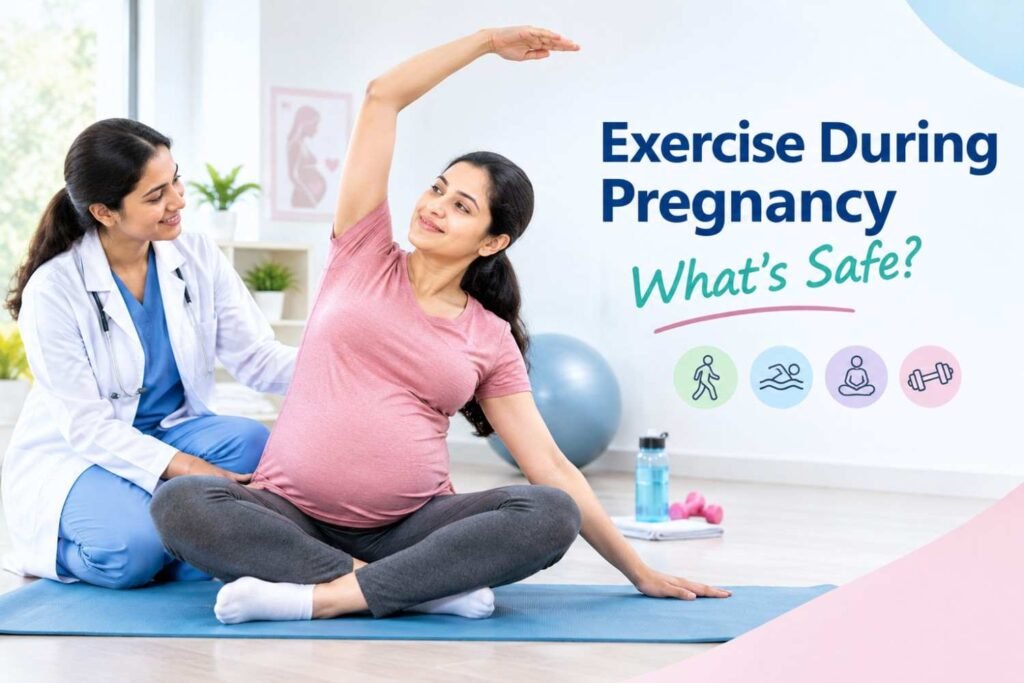

Exercise during pregnancy is generally safe and beneficial for women who have an uncomplicated pregnancy. Staying physically active can support overall fitness, help manage healthy pregnancy weight gain and may reduce the risk of certain pregnancy-related complications.
The American College of Obstetricians and Gynecologists (ACOG) states that, in the absence of medical or obstetric complications or contraindications, physical activity during pregnancy is considered safe and desirable. Women who were already physically active before pregnancy can often continue with appropriate modifications.
However, pregnancy is different for every woman.
The type, intensity and duration of exercise should be adapted according to your health, fitness level, stage of pregnancy and your obstetrician’s advice.
If you have a high-risk pregnancy, pregnancy complications or an existing medical condition, speak with your healthcare provider before starting or changing your exercise routine.
Benefits of Exercise During Pregnancy
Regular physical activity can offer several benefits during pregnancy.
According to ACOG and WHO guidance, physical activity during pregnancy may help:
1. Support Healthy Weight Gain
Regular activity can help you maintain appropriate physical fitness and support healthy pregnancy weight management.
2. Reduce Back Discomfort
Pregnancy can place additional stress on the back and joints. Appropriate exercise can help maintain strength and physical conditioning and may reduce back discomfort.
3. Improve Cardiovascular Fitness
Moderate aerobic activity can help maintain cardiovascular fitness during pregnancy.
4. Reduce the Risk of Gestational Diabetes
Regular physical activity is associated with a lower risk of gestational diabetes in pregnancy.
5. Support Mental Well-Being
Physical activity can contribute to overall mental well-being and may help reduce the risk of depressive symptoms, including during the postpartum period.
6. Improve Strength and Mobility
Pregnancy changes your posture, balance and centre of gravity. Appropriate strength and mobility exercises can help you stay physically active as your body changes.
7. Support Overall Pregnancy Health
WHO reports that physical activity during pregnancy is associated with reduced risks of pre-eclampsia, gestational hypertension, gestational diabetes and excessive gestational weight gain, among other benefits.
How Much Exercise Is Recommended During Pregnancy?
For pregnant women without contraindications, WHO recommends at least 150 minutes of moderate-intensity aerobic physical activity throughout the week.
This does not mean you need to exercise for 150 minutes in one session.
You can divide your activity throughout the week.
For example:
- 30 minutes × 5 days per week
- 20–30 minutes on most days
- Several shorter periods of activity throughout the day
ACOG also recommends at least 150 minutes of moderate-intensity aerobic activity each week for pregnant women with uncomplicated pregnancies.
If you were not physically active before pregnancy, start gradually rather than suddenly beginning intense workouts.
What Does Moderate Intensity Mean?
A simple way to judge intensity is the talk test.
If you can comfortably carry on a conversation while exercising, you are generally exercising at a moderate level.
You may notice that your breathing and heart rate increase, but you should not feel that you are pushing yourself to exhaustion. ACOG specifically describes the talk test as a useful way to monitor exercise intensity during pregnancy.
Safe Exercises During Pregnancy
The best pregnancy exercise is one that is appropriate for your health, comfortable for your changing body and approved by your healthcare provider when medical considerations exist.
1. Walking
Walking is one of the simplest ways to stay active during pregnancy.
It is:
- Low impact
- Easy to modify
- Accessible for most people
- Suitable for different fitness levels
You can begin with short walks and gradually increase duration according to your comfort.
2. Swimming and Water Exercise
Swimming and water-based exercise can be comfortable during pregnancy because the water supports some of your body weight.
It may be particularly useful for women who experience discomfort with weight-bearing exercise.
ACOG lists swimming and water workouts among activities that are considered safe for many pregnant women.
3. Stationary Cycling
A stationary bicycle can provide aerobic exercise without the balance risks associated with riding a standard bicycle as pregnancy progresses.
Because your centre of gravity changes during pregnancy, stationary cycling may be a safer option than outdoor cycling for many pregnant women.
4. Prenatal Yoga
Modified yoga can help with:
- Flexibility
- Relaxation
- Breathing
- Gentle movement
- Stress management
Choose pregnancy-appropriate modifications and avoid positions that cause discomfort.
Avoid prolonged periods lying flat on your back, particularly later in pregnancy, unless your healthcare provider specifically advises otherwise.
5. Modified Pilates
Prenatal or pregnancy-modified Pilates may help with strength, posture and controlled movement.
It is important to work with an instructor who understands pregnancy modifications and to avoid exercises that cause pain or excessive abdominal pressure.
6. Strength Training
Strength-conditioning exercises can be part of a healthy pregnancy routine.
Depending on your previous fitness level and medical advice, this may include:
- Light resistance exercises
- Resistance bands
- Controlled bodyweight exercises
- Pregnancy-appropriate strength movements
ACOG includes resistance exercises using weights or elastic bands among activities studied during pregnancy.
The goal is not to achieve maximum strength or personal records. Focus on controlled movement, proper technique and comfort.
Exercises to Be Careful With or Avoid
Not every physical activity is appropriate during pregnancy.
ACOG recommends avoiding activities that increase the risk of abdominal trauma, falls or other significant injury.
Avoid or discuss carefully:
- Contact sports with a risk of abdominal impact
- Activities with a high risk of falling
- Horseback riding
- Downhill skiing
- Water skiing
- Surfing
- Off-road cycling
- Gymnastics with significant fall risk
- Skydiving
- Scuba diving
- Hot yoga
- Hot Pilates
- Exercise in extreme heat
The specific recommendations can vary depending on your health, previous activity level and pregnancy.
What About Running During Pregnancy?
If you were already an experienced runner before pregnancy and have an uncomplicated pregnancy, you may be able to continue running with appropriate adjustments.
However, pregnancy changes balance, joints, energy requirements and exercise tolerance.
If running causes:
- Pain
- Dizziness
- Bleeding
- Fluid leakage
- Contractions
- Significant breathlessness
- Pelvic discomfort
stop exercising and contact your healthcare provider.
If you were not a runner before pregnancy, pregnancy is generally not the time to suddenly begin an intense running programme without professional guidance.
Exercise During Different Stages of Pregnancy
Your exercise routine may need to change as pregnancy progresses.
First Trimester
Some women can continue their usual exercise routine during early pregnancy.
However, nausea, vomiting and fatigue can make exercise more difficult.
Focus on:
- Hydration
- Comfortable intensity
- Adequate rest
- Avoiding overheating
If you are starting exercise for the first time, begin gradually.
Second Trimester
As your abdomen grows, balance and posture may change.
You may need to modify exercises that were previously comfortable.
Walking, swimming, stationary cycling, modified strength exercises and prenatal yoga may remain suitable options for many women.
Third Trimester
As pregnancy progresses, you may experience:
- Increased fatigue
- Reduced balance
- Back discomfort
- Pelvic pressure
- Shortness of breath
Your exercise routine may therefore need further modification.
Choose activities that feel comfortable and avoid exercises that increase your risk of falling or injury.
Your obstetrician can help you determine what is appropriate for your pregnancy.
How to Exercise Safely During Pregnancy
Following a few basic precautions can make physical activity more comfortable.
Stay Hydrated
Drink enough fluids before, during and after exercise.
Dehydration can contribute to dizziness and other symptoms.
Avoid Overheating
Avoid exercising in very hot or humid conditions.
Hot yoga and hot Pilates should be avoided during pregnancy because of the risk of overheating.
Wear Comfortable Clothing
Choose loose, comfortable clothing and supportive footwear appropriate for your activity.
Warm Up and Cool Down
Begin gradually and allow your body to transition into and out of exercise.
Listen to Your Body
Pregnancy is not the time to ignore pain or unusual symptoms.
If an activity does not feel right, stop and discuss it with your healthcare provider.
Avoid Prolonged Flat-on-Your-Back Exercise
After around 20 weeks, prolonged exercise while lying flat on your back may reduce venous return because of pressure from the uterus. ACOG recommends considering modifications to avoid prolonged supine exercise.
When Should You Stop Exercising During Pregnancy?
Stop exercising and contact your obstetrician or seek medical assessment if you experience warning signs such as:
- Vaginal bleeding
- Fluid leaking or gushing from the vagina
- Regular, painful contractions
- Chest pain
- Dizziness or fainting
- Severe or unusual headache
- Shortness of breath before starting exercise
- Significant muscle weakness affecting balance
- Calf pain or swelling
- Significant abdominal pain
These warning signs are identified in ACOG guidance as reasons to discontinue exercise and seek medical advice.
If symptoms are severe or you believe you are experiencing an emergency, seek immediate medical care.
Who Should Speak to a Doctor Before Exercising?
Most women with uncomplicated pregnancies can remain physically active.
However, exercise recommendations should be individualized when a woman has a medical or obstetric complication.
Speak with your obstetrician before beginning or changing an exercise programme if you have concerns about:
- A high-risk pregnancy
- Pregnancy complications
- Significant bleeding
- Heart or lung disease
- Severe anaemia
- Previous pregnancy complications
- Placental problems
- Preterm-labour concerns
- Multiple pregnancy
- Other medical conditions affecting pregnancy
ACOG recommends clinical evaluation when there may be a medical reason to avoid exercise and individualized guidance for women with medical or obstetric complications.
Common Myths About Exercise During Pregnancy
Myth 1: Exercise can cause miscarriage.
For women with uncomplicated pregnancies, evidence does not support the idea that appropriate physical activity increases miscarriage risk.
Myth 2: Pregnant women should avoid exercise.
Not necessarily.
For most women with uncomplicated pregnancies, regular physical activity is encouraged.
Myth 3: You need to stop exercising once your belly grows.
Exercise often needs to be modified as pregnancy progresses, but growing your belly does not automatically mean you must stop all physical activity.
Myth 4: More exercise is always better.
Pregnancy exercise should focus on appropriate intensity, safety and consistency—not maximum performance.
Myth 5: Only cardio exercise is useful.
Pregnancy activity can include aerobic exercise, appropriate strength training and gentle stretching. WHO recommends incorporating different forms of activity when appropriate.
Frequently Asked Questions
Is exercise safe during pregnancy?
For most women with uncomplicated pregnancies, regular physical activity is safe and beneficial. However, women with medical or obstetric complications should receive individualized advice from their healthcare provider.
How many minutes should I exercise during pregnancy?
WHO and ACOG recommend at least 150 minutes of moderate-intensity aerobic activity per week for pregnant women without contraindications. This can be divided into shorter sessions throughout the week.
Is walking safe during pregnancy?
Walking is generally considered a safe, low-impact form of exercise during pregnancy for most women with uncomplicated pregnancies.
Can I do strength training while pregnant?
Appropriate resistance and strength-conditioning exercises can be included during pregnancy. The exercises and intensity should be suitable for your fitness level and pregnancy, and medical guidance may be needed if you have complications.
Can I do yoga during pregnancy?
Modified prenatal yoga can be appropriate for many pregnant women. Avoid poses that cause discomfort and prolonged positions lying flat on your back, particularly later in pregnancy.
Can I run during pregnancy?
Women who were experienced runners before pregnancy may be able to continue running during an uncomplicated pregnancy, with appropriate modifications. If you are new to running, discuss starting an intense running programme with your healthcare provider.
What exercises should I avoid during pregnancy?
Activities with a high risk of falling, abdominal trauma, overheating or certain pressure-related risks should generally be avoided. Examples include contact sports, skydiving, scuba diving, hot yoga and some high-fall-risk activities.
When should I stop exercising during pregnancy?
Stop exercising and contact your healthcare provider if you experience symptoms such as vaginal bleeding, fluid leakage, painful regular contractions, dizziness, chest pain, significant shortness of breath, calf pain/swelling or other concerning symptoms.
Is exercise safe during a high-risk pregnancy?
It depends on the specific condition and pregnancy. Women with high-risk pregnancies should not assume that general exercise recommendations apply to them. Their obstetrician should provide individualized guidance.
Final Takeaway
Exercise during pregnancy can be a healthy part of prenatal care for many women.
For an uncomplicated pregnancy, activities such as walking, swimming, stationary cycling, modified yoga, Pilates and appropriate strength exercises can help you stay active while your body changes.
The goal is not to exercise harder—it is to exercise safely and appropriately.
Aim for regular moderate activity when medically appropriate, stay hydrated, avoid overheating and high-risk activities, and pay attention to warning signs.
Most importantly, your pregnancy is unique. If you have a medical condition, pregnancy complication or concerns about your exercise routine, discuss your activity plan with your obstetrician.
Pregnancy Care at SPAW Hospital, Mohali
At SPAW Hospital, Sector 70, Mohali, pregnancy care focuses on supporting mothers throughout pregnancy, including routine antenatal care and management of pregnancies that require additional monitoring.
If you have questions about exercise, nutrition, pregnancy symptoms or your individual activity level, discuss them during your prenatal appointment.
Need Pregnancy Guidance?
Book Your First FREE Pregnancy Consultation
📞 7837749294
SPAW Hospital
Sector 70, Mohali, Punjab
Medical Disclaimer
This article is intended for general educational purposes and should not replace individualized medical advice, diagnosis or treatment. Exercise recommendations can vary based on your health, pregnancy, fitness level and medical or obstetric conditions. Always consult your obstetrician or qualified healthcare professional if you are unsure whether a particular activity is appropriate for you.


