
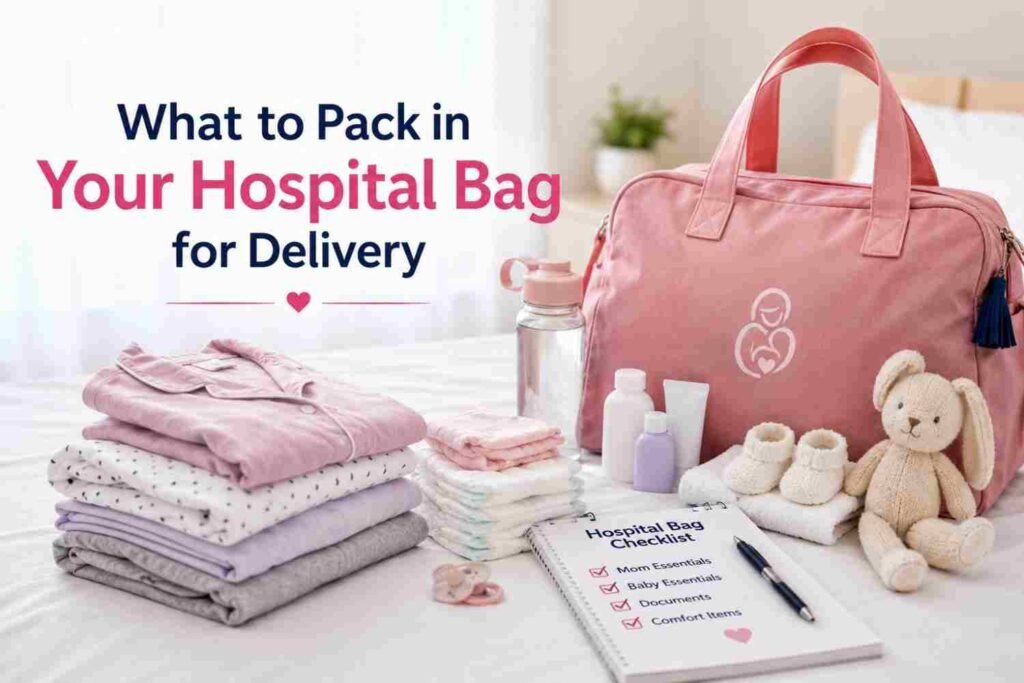

As your due date approaches, preparing a hospital bag checklist for delivery can make your journey to the hospital much less stressful. Whether you are planning a normal delivery or may require a Caesarean delivery, having essential items packed in advance helps you feel more organized and prepared.
Many expecting parents start wondering: What should I pack in my hospital bag for delivery? The answer depends on your individual needs, the hospital’s policies, the expected length of your stay and whether you are having a normal or Caesarean delivery.
A well-prepared hospital bag should include essentials for the mother, newborn baby, accompanying family member and important documents.
Ideally, start preparing your hospital bag several weeks before your expected due date. This gives you enough time to add anything you may have forgotten and ensures that your bag is ready if labour begins earlier than expected.
This complete guide will help you understand what to pack in your hospital bag for delivery, including essentials for the mother, baby, birth partner, documents and postpartum recovery.
When Should You Pack Your Hospital Bag?
There is no single perfect date for packing a hospital bag, but it is generally a good idea to have your essentials prepared by around 35–36 weeks of pregnancy, or earlier if your healthcare provider recommends it.
If you have a high-risk pregnancy, are expecting twins or have been advised that delivery may happen earlier, ask your obstetrician when you should have your bag ready.
You do not necessarily need to carry everything in one large suitcase. A practical approach is to organize your belongings into separate sections or smaller bags.
For example:
- Mom’s essentials
- Baby’s essentials
- Documents
- Postpartum items
- Birth partner’s belongings
This makes it easier for your family or hospital staff to find what you need.
What Should Be in Your Hospital Bag?
Your hospital bag should contain items that will help you stay comfortable before and after delivery.
The main categories include:
- Important medical documents
- Comfortable clothing
- Personal hygiene products
- Maternity essentials
- Nursing and breastfeeding items
- Baby clothing
- Newborn essentials
- Phone and charger
- Medication, if prescribed
- Items for your birth partner
- Any specific items recommended by your hospital
Remember that every hospital has its own policies regarding clothing, bedding, newborn supplies and medications. It is a good idea to ask your maternity team what the hospital provides before packing.
Hospital Bag Checklist for Mother
Your needs will be the most important part of the hospital bag.
1. Comfortable Nightwear
Pack loose and comfortable nightwear that allows easy access for breastfeeding.
Consider carrying:
- 2–3 comfortable night suits
- Front-opening nightwear
- Loose cotton clothing
- Comfortable robe or cardigan if needed
Front-opening clothing can be especially convenient after delivery because it makes breastfeeding easier.
2. Comfortable Clothing for Going Home
Choose loose-fitting clothing for your journey home.
Your abdomen may still feel sensitive after delivery, particularly following a Caesarean section, so avoid tight waistbands.
A comfortable maternity dress, loose trousers or soft cotton clothing can be a good choice.
3. Comfortable Underwear
Pack several pairs of comfortable, high-waisted cotton underwear.
After delivery, postpartum bleeding is common, so choose underwear that is comfortable and suitable for maternity pads.
If you are having a Caesarean delivery, high-waisted underwear can be more comfortable because it may sit above the incision area.
4. Maternity Pads
Postpartum bleeding, known as lochia, can continue for several days or weeks after delivery.
Pack suitable maternity pads if your hospital advises you to bring them.
Avoid relying only on regular sanitary pads, as postpartum bleeding can initially be heavier than a typical period.
5. Nursing Bras
Breastfeeding-friendly bras can make feeding easier and more comfortable.
Consider packing 2–3 nursing bras depending on the expected length of your hospital stay.
6. Breastfeeding Essentials
Depending on your preferences and hospital recommendations, you may consider carrying:
- Nursing bras
- Breast pads
- Nipple cream recommended by your healthcare provider
- Breastfeeding pillow, if you prefer using one
You do not necessarily need to pack a breast pump unless your doctor or lactation consultant has advised you to use one.
7. Toiletries
Pack basic personal-care items such as:
- Toothbrush
- Toothpaste
- Soap or body wash
- Shampoo
- Comb or hairbrush
- Hair ties
- Moisturizer
- Lip balm
- Deodorant
- Face wash
- Tissues
- Hand sanitizer
Choose products that are comfortable for you and avoid strongly scented products if you or your baby are sensitive to fragrances.
8. Slippers or Comfortable Footwear
A pair of comfortable, non-slip slippers can be useful for walking around the hospital.
You may also want to carry comfortable footwear for going home.
9. Towels
Depending on what your hospital provides, you may want to pack a small personal towel.
Check with the hospital beforehand so you do not carry unnecessary items.
10. Water Bottle
Staying hydrated is important during your hospital stay.
A reusable water bottle can be convenient, especially one that is easy to drink from while resting in bed.
11. Phone and Charger
Your phone can help you:
- Stay in touch with family
- Communicate with your healthcare team
- Take photographs
- Access important information
- Keep track of feeding or baby-care details
A long charging cable or power bank may be useful if electrical outlets are not conveniently located.
Maternity and Postpartum Essentials
After delivery, comfort becomes a major priority.
Depending on your hospital’s facilities and your personal needs, consider carrying:
Postpartum Essentials
- Maternity pads
- Comfortable underwear
- Nursing bras
- Loose clothing
- Breast pads
- Toiletries
- Comfortable slippers
- Personal towel
- Water bottle
Recovery Essentials
If you have a Caesarean delivery, your recovery needs may be different from those after a vaginal delivery.
Your healthcare team can guide you about wound care, movement, pain management, breastfeeding positions and other postpartum recovery needs.
Avoid bringing medications from home unless your doctor has specifically advised you to do so.
What to Pack for Baby
Your newborn will need only a few basic essentials during the hospital stay.
1. Newborn Clothes
Pack several comfortable outfits.
Depending on the weather, you may need:
- Newborn bodysuits
- Cotton tops
- Sleepsuits
- Soft pants
- Mittens
- Socks
- Caps, if recommended
- A sweater or warm layer during colder weather
Avoid clothes with rough materials or complicated fasteners.
2. Newborn Diapers
Pack newborn-sized diapers if your hospital does not provide them.
The number required depends on the length of your hospital stay and the hospital’s facilities.
3. Soft Baby Wipes or Cotton
Ask your maternity team what they recommend for newborn hygiene.
Some parents prefer cotton and water during the first few days, while others use newborn-safe wipes.
4. Baby Blanket
A soft blanket can be useful when carrying your newborn home.
Choose the blanket according to the weather and avoid overheating the baby.
5. Burp Cloths
Carry a few clean, soft burp cloths for feeding and cleaning small milk spills.
6. Baby Towel
A soft baby towel can be useful if your hospital recommends bringing one.
7. Going-Home Outfit
Keep one complete outfit ready specifically for your baby’s discharge.
Choose the size according to your expected newborn size, but consider packing one slightly larger option as well.
Important Documents and Medical Records
Documents are among the most important things to pack because they may be needed for admission and medical decision-making.
Keep them together in a waterproof folder.
Consider carrying:
- Hospital registration or admission documents
- Pregnancy records
- Antenatal check-up records
- Ultrasound reports
- Blood test reports
- Blood group information
- Current medication list
- Doctor’s prescriptions
- Insurance documents
- Identification documents
- Any relevant previous medical records
- Emergency contact information
If you have been advised to bring specific reports or documents, keep them easily accessible.
Items for Your Birth Partner
Your birth partner may also spend several hours or overnight at the hospital.
Consider packing:
- Comfortable clothes
- Extra T-shirt
- Comfortable footwear
- Phone charger
- Water bottle
- Snacks, if permitted
- Personal toiletries
- Identification documents
- Some cash or payment method
A small separate bag for the birth partner can prevent the main maternity bag from becoming unnecessarily crowded.
What to Pack for a Caesarean Delivery
If a Caesarean delivery is planned or becomes necessary, you may have a slightly longer hospital stay and different recovery needs.
Consider carrying:
For Mom
- Loose, comfortable nightwear
- Front-opening tops
- High-waisted underwear
- Maternity pads
- Nursing bras
- Comfortable slippers
- Toiletries
- Loose clothing for discharge
- Extra comfortable clothing
High-waisted underwear and loose clothing can help avoid unnecessary pressure around the surgical incision.
Your doctor and hospital team will provide specific instructions regarding food, medications, wound care and postoperative recovery.
What Not to Overpack
It is easy to pack too much when preparing for your baby’s arrival.
Avoid filling your hospital bag with items you are unlikely to use.
You generally do not need to carry:
- Large quantities of baby clothes
- Excessive toys
- Large amounts of cosmetics
- Too many blankets
- Expensive jewellery
- Unnecessary electronic devices
- Large quantities of diapers unless requested
- Medicines without medical advice
Check what SPAW Hospital provides before your admission so that you can pack only what you actually need.
How to Organize Your Hospital Bag
A well-organized bag is much easier to use than one where everything is mixed together.
Consider using separate pouches or compartments.
Bag 1: Admission Essentials
Keep these at the top:
- Identification
- Medical records
- Insurance information
- Admission documents
- Phone
- Charger
Bag 2: Mom’s Essentials
Keep together:
- Nightwear
- Underwear
- Nursing bras
- Maternity pads
- Toiletries
- Slippers
Bag 3: Baby’s Essentials
Keep:
- Diapers
- Clothes
- Socks
- Mittens
- Blanket
- Burp cloths
- Going-home outfit
Bag 4: Birth Partner
Include:
- Clothing
- Toiletries
- Charger
- Snacks
- Water bottle
This simple organization can save time when you are tired or in labour.
Last-Minute Items to Keep Ready
Some items cannot be packed too early because you will still need them at home.
Keep a small checklist next to your hospital bag for last-minute items such as:
- Phone
- Wallet
- ID
- Daily medications
- Glasses or contact lenses
- Phone charger
- Water bottle
- House keys
You can also keep your hospital bag near the main entrance or another easily accessible location as your due date approaches.
Hospital Bag Checklist
For Mom
- Comfortable nightwear
- Front-opening tops or feeding-friendly clothing
- Comfortable underwear
- Maternity pads
- Nursing bras
- Breast pads
- Toiletries
- Slippers
- Comfortable clothes for going home
- Personal towel, if required
- Water bottle
- Phone and charger
For Baby
- Newborn clothes
- Diapers
- Soft wipes or cotton
- Socks
- Mittens
- Baby blanket
- Burp cloths
- Baby towel, if required
- Going-home outfit
Documents
- Identification documents
- Pregnancy records
- Ultrasound reports
- Blood test reports
- Prescription/medication list
- Insurance documents
- Hospital admission documents
- Relevant previous medical records
For Birth Partner
- Comfortable clothes
- Extra clothes
- Toiletries
- Phone charger
- Water bottle
- Snacks, if permitted
- Identification documents
Frequently Asked Questions
When should I pack my hospital bag for delivery?
It is a good idea to have your hospital bag ready by around 35–36 weeks of pregnancy. Your doctor may recommend preparing earlier depending on your pregnancy and individual circumstances.
How many clothes should I pack for the baby?
For a typical hospital stay, several newborn outfits are usually sufficient. The exact number depends on the expected length of stay and what your hospital provides.
What should I pack for a normal delivery?
For a vaginal delivery, focus on comfortable clothing, maternity pads, nursing bras, toiletries, documents, baby clothes and basic newborn essentials.
What should I pack for a C-section?
For a Caesarean delivery, pack loose clothing, high-waisted underwear, maternity pads, comfortable nightwear and other postpartum essentials. You may also need enough clothing for a potentially longer hospital stay.
Do I need to carry baby diapers to the hospital?
This depends on the hospital. Ask your maternity team whether diapers and other newborn supplies are provided.
Should I bring my own medicines?
Do not routinely bring or take medicines without discussing them with your doctor. Carry a list of your current medications and any medicines specifically advised by your healthcare provider.
Do I need to bring a breast pump?
Not necessarily. Whether you need a breast pump depends on your individual situation and your healthcare team’s recommendations.
What documents should I bring for delivery?
Carry your identification, pregnancy records, ultrasound reports, laboratory reports, prescriptions, insurance information and any other documents requested by your hospital.
What should I keep ready for an emergency admission?
Keep your hospital bag packed, important documents together and essential last-minute items such as your phone, charger, wallet and daily medications easily accessible.
Key Takeaways
- Start preparing your hospital bag around 35–36 weeks, or earlier if advised by your doctor.
- Pack separate essentials for mom, baby and birth partner.
- Keep pregnancy records and important documents in an easily accessible folder.
- Carry comfortable, loose clothing and postpartum essentials.
- Pack newborn clothes, diapers and a going-home outfit.
- If you are planning a Caesarean delivery, consider additional comfortable clothing and postpartum essentials.
- Check what your hospital provides before packing.
- Avoid overpacking unnecessary items.
- Keep last-minute essentials such as your phone, charger and identification ready.
- Most importantly, follow the specific instructions provided by your obstetrician and maternity hospital.
Conclusion
Preparing your hospital bag ahead of time can make the final weeks of pregnancy more organized and less stressful. Instead of waiting until labour begins, having your essential items ready allows you to focus on yourself and your baby when the time comes.
From comfortable clothes and maternity pads to newborn outfits, medical records and important documents, a simple hospital bag checklist for delivery can help ensure that you do not forget the essentials.
Every pregnancy and delivery is different, so your packing list should also reflect your individual needs. If your doctor has provided specific instructions, always follow those recommendations.
Maternity & Delivery Care at SPAW Hospital, Mohali
If you are preparing for childbirth and looking for comprehensive maternity and delivery care in Mohali, SPAW Hospital, Sector 70, Mohali provides maternity and women’s healthcare services.
Speak with your obstetrician about your delivery plan, hospital admission process and any specific items you should bring for your stay.


