

Knee pain can affect every aspect of daily life—from climbing stairs and walking short distances to getting a good night’s sleep. While mild knee discomfort often improves with rest, persistent pain that limits mobility may indicate a more serious underlying condition.
Millions of people develop knee problems due to aging, arthritis, previous injuries, or wear and tear. In many cases, lifestyle changes, medications, and physiotherapy provide relief. However, when these treatments no longer help and knee pain begins interfering with everyday activities, knee replacement surgery may become an effective treatment option.
Recognizing the warning signs early allows you to consult an orthopedic specialist before your condition worsens. In this guide, we’ll discuss the common symptoms that may indicate you need knee replacement surgery, its causes, diagnosis, and available treatment options.
What Is Knee Replacement Surgery?
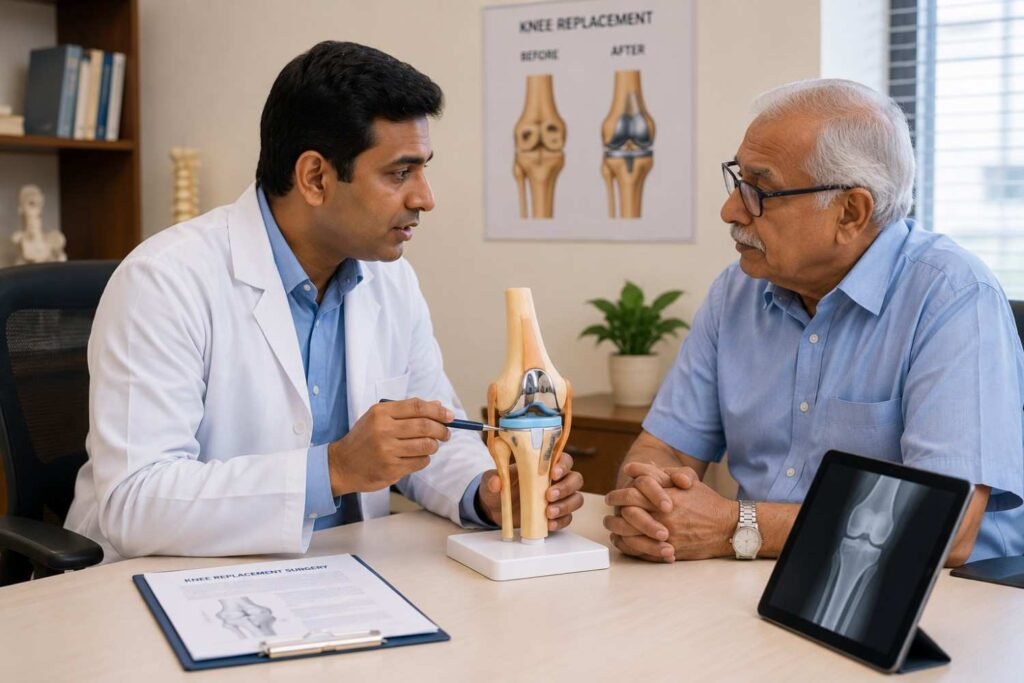
Knee replacement surgery, also known as knee arthroplasty, is a procedure in which damaged cartilage and worn-out surfaces of the knee joint are replaced with artificial implants. The primary goal is to relieve pain, restore joint function, and improve mobility.
Depending on the extent of joint damage, your orthopedic surgeon may recommend:
- Total Knee Replacement (TKR): The entire knee joint is replaced.
- Partial Knee Replacement (PKR): Only the damaged portion of the knee is replaced.
Modern knee replacement techniques have helped millions of patients regain mobility and return to their daily activities with improved comfort.
Common Causes of Knee Damage
Several conditions can lead to severe knee joint damage over time.
Osteoarthritis
Osteoarthritis is the most common reason for knee replacement surgery. It occurs when the cartilage cushioning the knee joint gradually wears away, causing pain, stiffness, and reduced movement.
Rheumatoid Arthritis
This autoimmune condition causes chronic inflammation that can damage the knee joint, resulting in pain, swelling, and deformity.
Post-Traumatic Arthritis
Previous fractures, ligament injuries, or sports injuries can increase the risk of arthritis later in life, leading to progressive knee damage.
Severe Knee Injury
Serious accidents or untreated ligament damage may affect joint stability and accelerate cartilage wear.
Signs You May Need Knee Replacement Surgery
Not every knee problem requires surgery. However, if you notice any of the following symptoms, it’s important to consult an orthopedic specialist.
1. Persistent Knee Pain
Pain that continues despite rest, medications, physiotherapy, or lifestyle modifications is one of the most common signs that your knee joint may be severely damaged.
If knee pain interferes with your daily routine, professional evaluation is recommended.
2. Difficulty Walking
Walking short distances should not be painful.
If you find yourself slowing down, limping, or needing frequent breaks because of knee pain, it may indicate advanced joint deterioration.
Some patients also begin relying on:
- Walking sticks
- Knee braces
- Walkers
- Support from family members
These are signs that your mobility is becoming increasingly limited.
3. Knee Stiffness
Do you struggle to bend or straighten your knee?
Morning stiffness, reduced flexibility, or difficulty sitting cross-legged can indicate significant cartilage damage.
Over time, stiffness can make routine activities increasingly difficult.
4. Pain While Climbing Stairs
One of the earliest warning signs of severe knee arthritis is pain while:
- Climbing stairs
- Going downstairs
- Standing up from a chair
- Squatting
- Getting in or out of a vehicle
These activities place additional stress on the knee joint, making damaged cartilage more noticeable.
5. Swelling That Doesn’t Improve
Occasional swelling after strenuous activity is common.
However, persistent swelling that continues for weeks or repeatedly returns despite treatment may indicate chronic joint inflammation or advanced arthritis.
6. Knee Deformity
As arthritis progresses, the knee may gradually change shape.
Some patients develop:
- Bow legs
- Knock knees
- Joint instability
- Visible deformity
These structural changes often affect balance and walking ability.
7. Pain Even While Resting
Healthy knees should not hurt while sitting or sleeping.
If knee pain continues even when you’re resting or wakes you up at night, it may suggest advanced joint damage requiring specialist evaluation.
8. Reduced Quality of Life
Perhaps the biggest sign is when knee pain prevents you from enjoying everyday life.
If you avoid:
- Walking
- Shopping
- Traveling
- Exercising
- Playing with grandchildren
- Social gatherings
because of knee pain, it may be time to discuss long-term treatment options with an orthopedic surgeon.
When Should You See an Orthopedic Surgeon?
Many people ignore knee pain, hoping it will improve with rest or over-the-counter medications. While occasional discomfort may not be a cause for concern, persistent or worsening symptoms should always be evaluated by an orthopedic specialist.
You should schedule a consultation if you experience:
- Knee pain lasting for several weeks or months
- Difficulty walking or climbing stairs
- Swelling that does not improve with rest
- Knee stiffness that limits movement
- Pain even while sitting or sleeping
- Reduced mobility that affects daily activities
- Knee deformity or instability
- Little or no relief from medications or physiotherapy
Early diagnosis allows for timely treatment and may help slow the progression of joint damage.
How Are Knee Problems Diagnosed?
An accurate diagnosis is essential to determine the severity of knee damage and recommend the most appropriate treatment.
Medical History
Your orthopedic surgeon will discuss:
- The duration of your knee pain
- Previous injuries or surgeries
- Medical conditions such as arthritis
- Current medications
- Activities that worsen or relieve your symptoms
Understanding your history helps identify the underlying cause of your knee problems.
Physical Examination
During the examination, your doctor will assess:
- Knee alignment
- Swelling
- Range of motion
- Joint stability
- Muscle strength
- Walking pattern (gait)
These findings provide valuable information about the condition of your knee joint.
X-Rays
X-rays are commonly used to evaluate:
- Joint space narrowing
- Bone spurs
- Arthritis severity
- Bone deformities
They help determine whether cartilage loss has progressed significantly.
MRI Scan
In certain cases, an MRI may be recommended to examine:
- Cartilage
- Ligaments
- Menisci
- Soft tissues
MRI scans are especially useful when symptoms are not fully explained by X-rays.
Non-Surgical Treatment Options
Not everyone with knee pain requires surgery. Many patients find relief through conservative treatments, particularly in the early stages of arthritis.
These options may include:
Medications
Pain-relieving and anti-inflammatory medications may help reduce discomfort and improve daily function.
Physiotherapy
A structured physiotherapy program can strengthen the muscles around the knee, improve flexibility, and enhance joint stability.
Lifestyle Modifications
Simple lifestyle changes can significantly reduce pressure on the knee joint, such as:
- Maintaining a healthy weight
- Regular low-impact exercise
- Avoiding activities that worsen pain
- Using supportive footwear
Knee Injections
For some patients, injections may provide temporary relief from pain and inflammation. Your orthopedic surgeon will advise whether this option is appropriate.
When Does Knee Replacement Become the Best Option?
Knee replacement surgery may be considered when conservative treatments no longer provide adequate relief and knee pain continues to interfere with everyday life.
Your orthopedic surgeon may recommend surgery if:
- Severe arthritis is visible on imaging studies
- Pain persists despite medication and physiotherapy
- Walking becomes increasingly difficult
- Knee stiffness significantly limits movement
- Sleep is disturbed by ongoing pain
- Daily activities become difficult or impossible
The decision is based on your symptoms, physical examination, imaging findings, and overall health—not just your age.
Benefits of Knee Replacement Surgery
Modern knee replacement surgery has helped millions of patients regain mobility and improve their quality of life.
Potential benefits include:
- Significant reduction in knee pain
- Improved walking ability
- Better joint movement
- Increased independence
- Easier participation in everyday activities
- Improved sleep due to reduced pain
- Enhanced overall quality of life
With appropriate rehabilitation and physiotherapy, many patients gradually return to their regular routines and enjoy long-term improvement in knee function.
Recovery After Knee Replacement Surgery
Recovery varies from person to person, but most patients begin walking with assistance shortly after surgery under medical supervision.
Recovery typically involves:
- Early mobilization
- Guided physiotherapy
- Strengthening exercises
- Gradual return to daily activities
- Regular follow-up appointments
Following your orthopedic surgeon’s instructions and completing your rehabilitation program are essential for achieving the best possible outcome.
Frequently Asked Questions (FAQs)
1. What is the most common sign that I may need knee replacement surgery?
Persistent knee pain that limits walking, climbing stairs, or daily activities despite non-surgical treatment is one of the most common signs.
2. Is knee replacement surgery only for older adults?
No. Although it is more common in older adults, younger patients with severe joint damage may also benefit from knee replacement surgery when appropriate.
3. How long does a knee replacement last?
Modern knee implants can last many years, depending on factors such as activity level, body weight, and overall health.
4. Will I be able to walk normally after surgery?
Many patients experience significant improvement in walking ability after recovery and rehabilitation, although individual results vary.
5. Is knee replacement surgery painful?
Pain is expected immediately after surgery, but it is managed with medications, and most patients notice gradual improvement as healing progresses.
6. How long is the recovery period?
Recovery differs for each individual. Many patients resume routine daily activities within a few weeks, while full recovery and strengthening may take several months.
7. Can both knees be replaced?
Yes. Depending on your condition, your orthopedic surgeon may recommend replacing one knee or both knees, either at the same time or in separate procedures.
8. When should I consult an orthopedic specialist?
If knee pain persists, limits your mobility, or affects your quality of life despite conservative treatment, consult an orthopedic surgeon for a comprehensive evaluation.
Conclusion
Living with chronic knee pain can make even the simplest tasks feel challenging. If you experience persistent pain, stiffness, swelling, difficulty walking, or reduced mobility that does not improve with medication or physiotherapy, it may be time to consider a professional evaluation.
Knee replacement surgery is not simply about replacing a joint—it is about restoring mobility, relieving pain, and helping you return to an active and independent lifestyle. Early consultation with an experienced orthopedic specialist can help you understand your condition and choose the most suitable treatment plan.
If knee pain is affecting your everyday life, don’t ignore the warning signs. Seeking timely medical care can make a meaningful difference in your long-term joint health.
Expert Knee Replacement Care at SPAW Hospital
At SPAW Hospital, our experienced orthopedic team provides comprehensive evaluation and advanced treatment for knee arthritis and joint damage. From accurate diagnosis and personalized treatment plans to modern knee replacement surgery and rehabilitation, we are committed to helping patients regain mobility and improve their quality of life.
If you’re struggling with persistent knee pain, schedule a consultation with our orthopedic specialists to discuss the most appropriate treatment options for your condition.


