
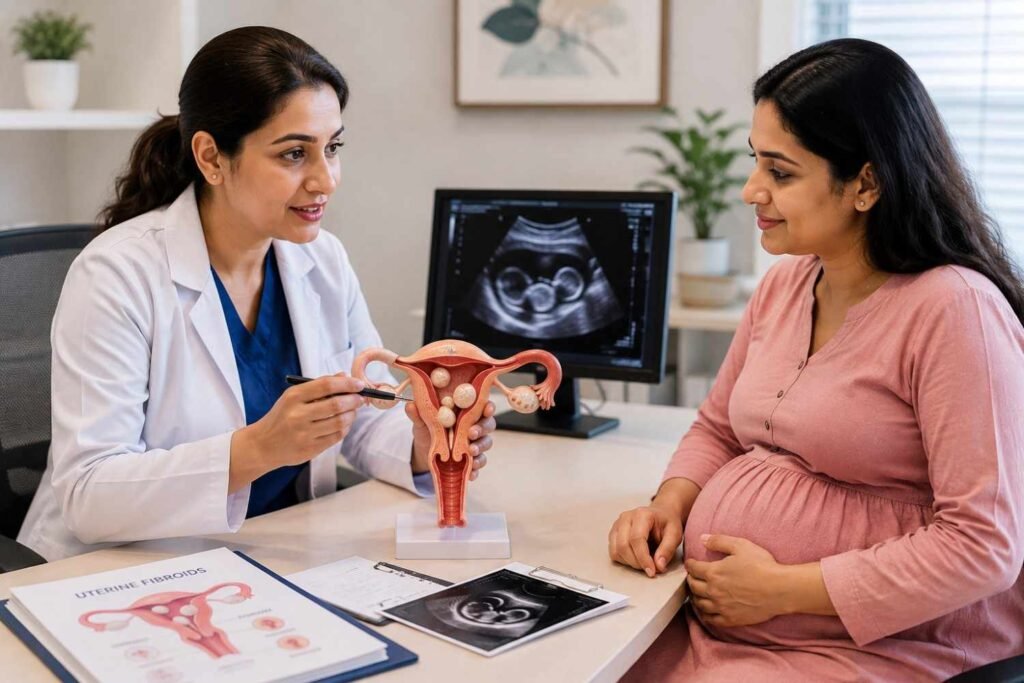

Many women diagnosed with uterine fibroids worry about whether they can conceive, carry a healthy pregnancy, or deliver safely. The good news is that most women with fibroids have successful pregnancies. However, depending on their size, number, and location, fibroids may sometimes increase the risk of certain pregnancy-related complications.
Understanding how fibroids affect pregnancy can help you make informed decisions and receive the right medical care. With early diagnosis, regular prenatal monitoring, and expert guidance, many women with fibroids go on to have healthy pregnancies and healthy babies.
In this article, we’ll explain how fibroids may affect fertility, pregnancy, labor, and delivery, along with available treatment options.
What Are Uterine Fibroids?
Uterine fibroids, also called leiomyomas or myomas, are non-cancerous growths that develop in or around the uterus. They are among the most common gynecological conditions affecting women of reproductive age.
Fibroids can vary significantly in:
- Size (from a few millimeters to several centimeters)
- Number (single or multiple)
- Location within the uterus
Common types include:
Intramural Fibroids
Develop within the muscular wall of the uterus and are the most common type.
Submucosal Fibroids
Grow into the uterine cavity and may interfere with implantation or pregnancy.
Subserosal Fibroids
Develop on the outer surface of the uterus and usually affect surrounding organs more than pregnancy.
Pedunculated Fibroids
Attached to the uterus by a stalk and may occasionally cause pain if they twist.
Many women with fibroids experience no symptoms and discover them during routine pelvic examinations or pregnancy ultrasounds.
Can Fibroids Affect Pregnancy?
Yes, fibroids can affect pregnancy, but not every woman experiences complications.
The impact depends on several factors, including:
- Fibroid size
- Number of fibroids
- Their location within the uterus
- Whether they distort the uterine cavity
- Overall maternal health
Many women with small fibroids have completely normal pregnancies. Larger fibroids or those located inside the uterine cavity are more likely to influence pregnancy outcomes.
With proper prenatal care and regular monitoring, most pregnancies involving fibroids can be managed successfully.
How Fibroids May Affect Fertility
Although many women with fibroids conceive naturally, certain fibroids can reduce fertility.
Fibroids may:
- Distort the uterine cavity
- Block the fallopian tubes
- Prevent embryo implantation
- Reduce blood supply to the uterine lining
- Increase inflammation within the uterus
Submucosal fibroids are generally more likely to interfere with conception than other types.
Women experiencing infertility should consult a gynecologist to determine whether fibroids are contributing to the problem.
Pregnancy Risks Associated with Fibroids
While many pregnancies progress normally, fibroids may increase the likelihood of certain complications.
Possible risks include:
Miscarriage
Large or submucosal fibroids may increase the risk of early pregnancy loss in some women.
Pain During Pregnancy
As pregnancy hormones increase, fibroids may temporarily enlarge, sometimes causing:
- Severe abdominal pain
- Pelvic pressure
- Back pain
Pain is usually managed conservatively with medical supervision.
Placental Problems
Depending on their location, fibroids may increase the risk of:
- Placental abruption
- Placenta previa (in some cases)
- Reduced blood flow to the placenta
These conditions require close monitoring throughout pregnancy.
Preterm Labor
Some women with large fibroids may have an increased risk of preterm contractions or premature birth.
Baby’s Position
Large fibroids can limit space inside the uterus, making it more likely for the baby to remain in:
- Breech position
- Transverse lie
This may influence delivery planning.
Cesarean Delivery
Women with large fibroids are generally more likely to require a Cesarean section if the fibroids obstruct the birth canal or affect the baby’s position.
However, many women with fibroids still deliver vaginally.
Symptoms of Fibroids During Pregnancy
Some pregnant women have no symptoms at all.
Others may experience:
- Pelvic pain
- Lower abdominal pressure
- Back pain
- Frequent urination
- Constipation
- Heavy bleeding (less common during pregnancy)
- Pain caused by degeneration of the fibroid
Any unusual pain or bleeding during pregnancy should be evaluated immediately by a healthcare professional.
How Are Fibroids Diagnosed During Pregnancy?
Fibroids are often discovered during routine prenatal ultrasounds.
Your gynecologist may recommend:
- Pelvic examination
- Ultrasound scan
- Follow-up ultrasound to monitor fibroid growth
- Fetal growth assessments during pregnancy
Regular monitoring helps ensure both mother and baby remain healthy.
Can Fibroids Harm the Baby?
In most cases, fibroids do not directly harm the baby. Many women with uterine fibroids have completely healthy pregnancies and deliver healthy babies. However, certain fibroids—particularly those that are large, multiple, or located inside the uterine cavity—may increase the risk of pregnancy complications.
Possible effects include:
- Restricted space for the growing baby
- Abnormal fetal position (such as breech)
- Reduced fetal growth in rare cases
- Increased likelihood of preterm birth
These complications are not inevitable. With regular prenatal check-ups and ultrasound monitoring, your gynecologist can closely track your baby’s growth and take appropriate measures if needed.
Treatment Options for Fibroids Before and During Pregnancy
Treatment depends on several factors, including your symptoms, the size and location of the fibroids, and whether you are planning a pregnancy or are already pregnant.
Before Pregnancy
If fibroids are causing infertility, heavy bleeding, or recurrent pregnancy loss, your doctor may recommend treatment before conception.
Treatment options may include:
Medication
Certain medications can temporarily control symptoms such as heavy menstrual bleeding or pelvic pain. However, they usually do not permanently eliminate fibroids.
Laparoscopic Myomectomy
For women who wish to preserve fertility, laparoscopic myomectomy is often recommended. This minimally invasive procedure removes fibroids while preserving the uterus, allowing many women to plan for pregnancy after recovery.
Hysteroscopic Myomectomy
Submucosal fibroids located inside the uterine cavity can often be removed using hysteroscopic surgery, which is performed without external incisions.
During Pregnancy
Surgical removal of fibroids is rarely performed during pregnancy because it may increase the risk of bleeding and other complications.
Instead, treatment focuses on:
- Managing pain safely
- Monitoring fibroid growth
- Regular fetal growth assessments
- Managing pregnancy-related complications if they occur
Most women require only observation and supportive care throughout pregnancy.
Can You Have a Normal Delivery with Fibroids?
Yes. Many women with fibroids have successful normal vaginal deliveries.
The method of delivery depends on several factors, including:
- Size of the fibroid
- Location of the fibroid
- Baby’s position
- Placenta location
- Overall pregnancy health
A cesarean section may be recommended if:
- A fibroid blocks the birth canal.
- The baby remains in a breech or transverse position.
- There are additional pregnancy complications.
Your obstetrician will assess your condition during the final weeks of pregnancy and recommend the safest delivery plan for both you and your baby.
When Should You See a Gynecologist?
If you are pregnant and have been diagnosed with fibroids—or suspect you may have them—regular medical care is essential.
Consult your gynecologist if you experience:
- Persistent pelvic pain
- Heavy vaginal bleeding
- Severe abdominal pain
- Painful contractions before term
- Fever with abdominal pain
- Reduced fetal movements
- Difficulty emptying your bladder
- Sudden increase in abdominal swelling
Early evaluation helps identify potential complications and ensures timely treatment.
Can Fibroids Be Prevented?
There is no guaranteed way to prevent fibroids, but maintaining a healthy lifestyle may support overall reproductive health.
Healthy habits include:
- Maintaining a healthy weight
- Eating plenty of fruits and vegetables
- Exercising regularly
- Managing stress
- Controlling blood pressure
- Attending routine gynecological check-ups
Women with a family history of fibroids should be especially attentive to routine pelvic examinations and seek medical advice if they develop symptoms.
Frequently Asked Questions (FAQs)
1. Can fibroids stop me from getting pregnant?
Many women with fibroids conceive naturally. However, some fibroids—especially submucosal fibroids—may make conception more difficult depending on their size and location.
2. Do fibroids always cause pregnancy complications?
No. Most women with small or uncomplicated fibroids have healthy pregnancies without significant problems.
3. Can fibroids grow during pregnancy?
Yes. Some fibroids may temporarily increase in size due to hormonal changes, particularly during the first trimester. Others remain stable or may even shrink after delivery.
4. Will I need a cesarean section if I have fibroids?
Not necessarily. Many women with fibroids have successful vaginal deliveries. The need for a cesarean depends on the fibroid’s size, location, and its effect on labor.
5. Is laparoscopic fibroid surgery safe before pregnancy?
For selected patients, laparoscopic myomectomy is a safe and effective option that can improve symptoms and may enhance future pregnancy outcomes. Your gynecologist will advise whether it is appropriate for your situation.
6. Can fibroids disappear after pregnancy?
Some fibroids shrink naturally after childbirth due to hormonal changes, although they do not always disappear completely.
7. Are fibroids cancerous?
No. Uterine fibroids are almost always benign (non-cancerous) growths.
8. When should I seek immediate medical care during pregnancy?
Seek urgent medical attention if you experience heavy bleeding, severe abdominal pain, leaking of fluid, high fever, regular contractions before your due date, or reduced fetal movements.
Conclusion
Being diagnosed with fibroids during pregnancy can be concerning, but it does not mean you cannot have a healthy pregnancy. Most women with fibroids successfully conceive, carry their pregnancy to term, and deliver healthy babies. The impact of fibroids depends on their size, number, and location, making individualized care essential.
Early diagnosis, regular prenatal check-ups, and timely medical guidance can help manage potential complications and support a safe pregnancy. If you are planning a pregnancy or have already been diagnosed with uterine fibroids, consulting an experienced gynecologist is the best way to understand your treatment options and receive personalized care.
Expert Fibroid & Pregnancy Care at SPAW Hospital, Mohali
At SPAW Hospital, Mohali, our experienced gynecologists provide comprehensive care for women with uterine fibroids, whether you are planning a pregnancy, currently pregnant, or experiencing fibroid-related symptoms.
We offer:
- Advanced fibroid diagnosis
- Fertility evaluation
- High-risk pregnancy care
- Laparoscopic fibroid surgery (when appropriate)
- Personalized antenatal care
- Safe delivery planning
Our goal is to help every woman achieve the best possible pregnancy outcome through compassionate, evidence-based care.
Book your consultation today and receive expert guidance for fibroid management and a healthy pregnancy.


